Show summary Hide summary
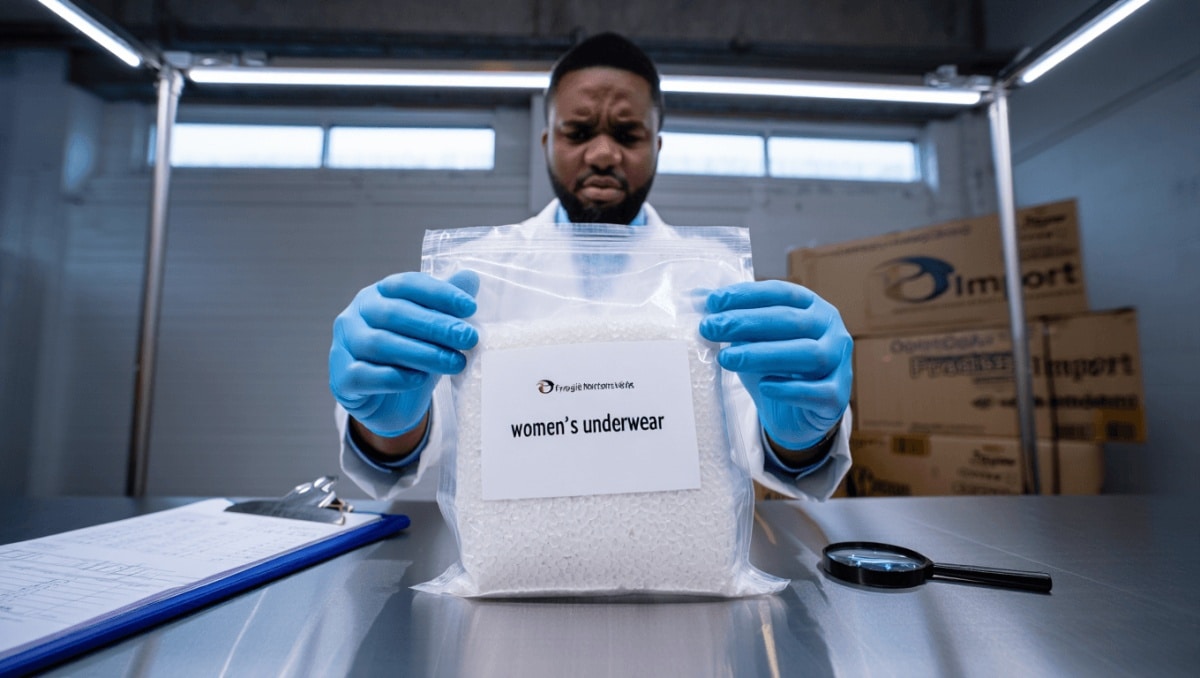
Customs officers recently uncovered a shipment labeled “women’s underwear” that, upon inspection, contained packaged bacterial samples rather than clothing — a discovery that has prompted immediate public-health and security reviews. Authorities say the find highlights gaps in how biological materials travel across borders and raises fresh questions about lab oversight and international shipping controls.
What happened and why it matters now
According to officials, the parcel passed initial paperwork checks before routine screening flagged inconsistencies in weight and internal density. When containerized material was opened under controlled conditions, inspectors identified a number of sealed vials and culture plates — items inconsistent with the declared contents.
Michael Page dropped from UFC rankings despite victory: what it means for his career
Viral video shows 81-year-old delivery worker struggling with heavy luggage
This seizure is significant because the movement of unregistered biological material can enable accidental releases, improper handling by non-specialists, or intentional misuse. For governments and public-health agencies still managing pandemic recovery and laboratory biosafety reforms, the incident serves as a timely reminder that regulatory blind spots remain.
Immediate response and public-risk controls
Authorities say they followed standard containment protocols: isolating the package, moving material to a certified laboratory, and notifying public-health and law-enforcement partners. No exposure to the general public has been reported so far.
- Containment: Package sealed and transported to a secure lab.
- Testing: Samples are undergoing identification to determine species and risk level.
- Tracing: Investigators are examining shipment origin, manifests, sender identity and declared purpose.
- Notifications: Relevant regulatory and public-health bodies have been alerted to assess broader impact.
Who is involved and what they can do
The response typically involves multiple agencies — customs, public-health laboratories, regulatory bodies that license biological agents and, where relevant, criminal investigators. Collaboration is crucial: forensic analysis to identify organisms, legal review of permit records, and public-health assessment to determine exposure risk.
| Actor | Likely role | Possible outcome |
|---|---|---|
| Customs/Border Control | Intercept and secure package; start chain-of-custody | Detention of shipment; referral to lab and investigators |
| Public-health Laboratory | Identify organism; assess pathogenicity and antibiotic susceptibility | Risk classification; guidance on public exposure |
| Regulatory Agencies | Verify permits, import/export declarations, and lab registrations | Administrative penalties or revocation of credentials |
| Law Enforcement | Investigate intent, trafficking networks, or fraud | Criminal charges if wrongdoing is found |
Wider implications for labs, shippers and the public
For licensed researchers and institutions, the episode underscores the importance of clear documentation, secure packaging and compliance with biosafety and transport rules for biological agents. Commercial couriers and postal services may need to tighten scanning and training to detect mismatches between declared and actual contents.
For the public, the immediate takeaway is limited — authorities report no evidence of community exposure — but the incident does illustrate how easily regulated materials can move if actors exploit labeling loopholes or paperwork gaps.
What to watch next
The most important short-term developments will be the laboratory identification of the organisms and the findings of the investigation into origin and intent. Those results will determine whether this is a case of administrative error, illicit trade in biological materials, or something more serious.
- Lab confirmation of species and risk classification — expected within days to weeks.
- Investigative findings about sender and recipient, including permit status and declared purpose.
- Any regulatory action or criminal charges announced by authorities.
Until formal public updates are released, agencies typically limit details to avoid compromising investigations and to ensure safety procedures are followed. Still, the incident adds urgency to ongoing discussions about better international tracking of biological shipments and clearer accountability for those handling potentially hazardous materials.
In short, the discovery of bacterial samples hidden in a parcel labeled as underwear is not just an odd headline: it highlights a real intersection of biosecurity, shipping oversight and public-health preparedness, with tangible consequences for how biological materials are moved and regulated worldwide.