Show summary Hide summary
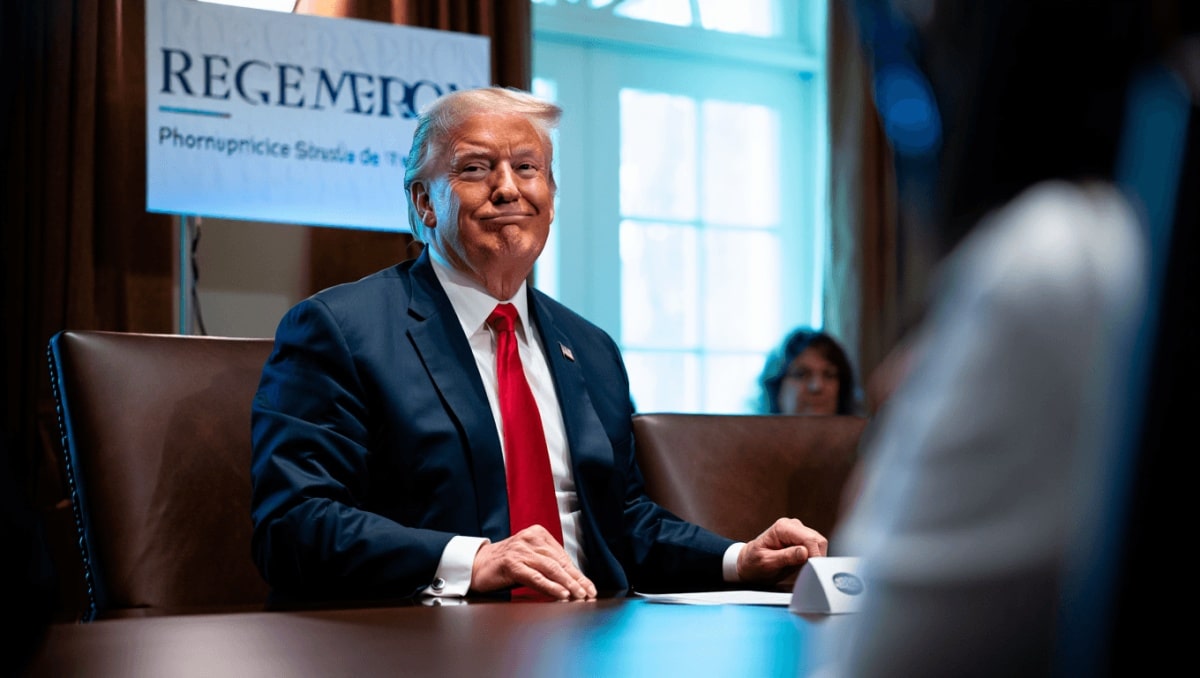
Donald Trump announced what he described as a pricing agreement with biotech firm Regeneron, saying the move will cut costs for patients and reshape the debate over prescription-drug prices. The claim has immediate political and market implications, but key details — who benefits, how savings will be delivered and when — remain unclear.
Trump framed the arrangement as a win for consumers, presenting it as evidence of progress on a long-running campaign promise to lower drug costs. The company named in the announcement is best known for developing high-profile biologic therapies; however, the mechanics of the supposed deal were not provided in full at the time of the announcement.
What we know and what we don’t
The announcement has prompted quick reactions across politics, healthcare and finance. Observers are watching three practical questions closely: whether the agreement covers public programs like Medicare, whether it applies broadly across Regeneron’s portfolio or is limited to a specific product, and whether the price changes represent an industry precedent or a one-off arrangement.
Michael Page dropped from UFC rankings despite victory: what it means for his career
Viral video shows 81-year-old delivery worker struggling with heavy luggage
- Scope: It is not yet clear which medicines are covered or whether the terms apply to U.S. federal programs, private insurers, or direct patient pricing.
- Timing: No definitive timeline was disclosed for when any price reductions would take effect.
- Structure: Analysts say meaningful discounts usually require negotiated contracts with payers or regulatory changes — one-off announcements rarely translate immediately into lower out-of-pocket costs.
- Regulatory review: Any formal pricing arrangement with broad implications could draw scrutiny from federal agencies and lawmakers focused on competition and drug access.
Why this matters now
Drug pricing has emerged as a central issue for voters and investors. A high-profile announcement linking a political figure with a major pharmaceutical company changes the conversation from policy proposals to an apparent market outcome. For patients, the key question is practical: will they pay less at the pharmacy or face fewer coverage barriers?
Health economists caution that headline claims can overstate near-term impact. Price reductions often depend on negotiated discounts, changes to rebate structures, or new payment models such as value-based contracts. Those mechanisms can take months to implement and require cooperation from insurers, pharmacy benefit managers and providers.
Reactions and potential consequences
Advocacy groups and policy experts welcomed the idea of lower costs but urged transparency. Without contract language, independent oversight or regulatory filings, it is difficult to verify whether savings would be widespread or limited to specific patient groups.
Investors and industry analysts will be watching Regeneron’s stock and guidance closely; a credible, enforceable pricing deal could affect revenue forecasts and competitive dynamics in biologics and specialty medicines. Lawmakers who have pushed for binding reforms to drug pricing may also press for details or seek hearings to evaluate the arrangement.
Next steps to watch
Several developments could clarify the announcement:
- Formal filings or a public statement from Regeneron detailing contract terms and affected products.
- Responses from major insurers and Medicare to confirm whether and how they would implement any new prices.
- Regulatory or congressional inquiries into the deal’s structure, particularly if it changes market incentives or involves federal programs.
For now, the statement shifts attention from debate to verification. If the agreement produces measurable, durable price cuts, it could influence future negotiations between government officials, industry and payers. If not, critics are likely to describe it as political posturing.
Reporters will be watching for official documents and statements from Regeneron, federal agencies and major payers to determine whether the announcement signals a substantive shift in how expensive biologic drugs are priced and paid for in the United States.