Show summary Hide summary
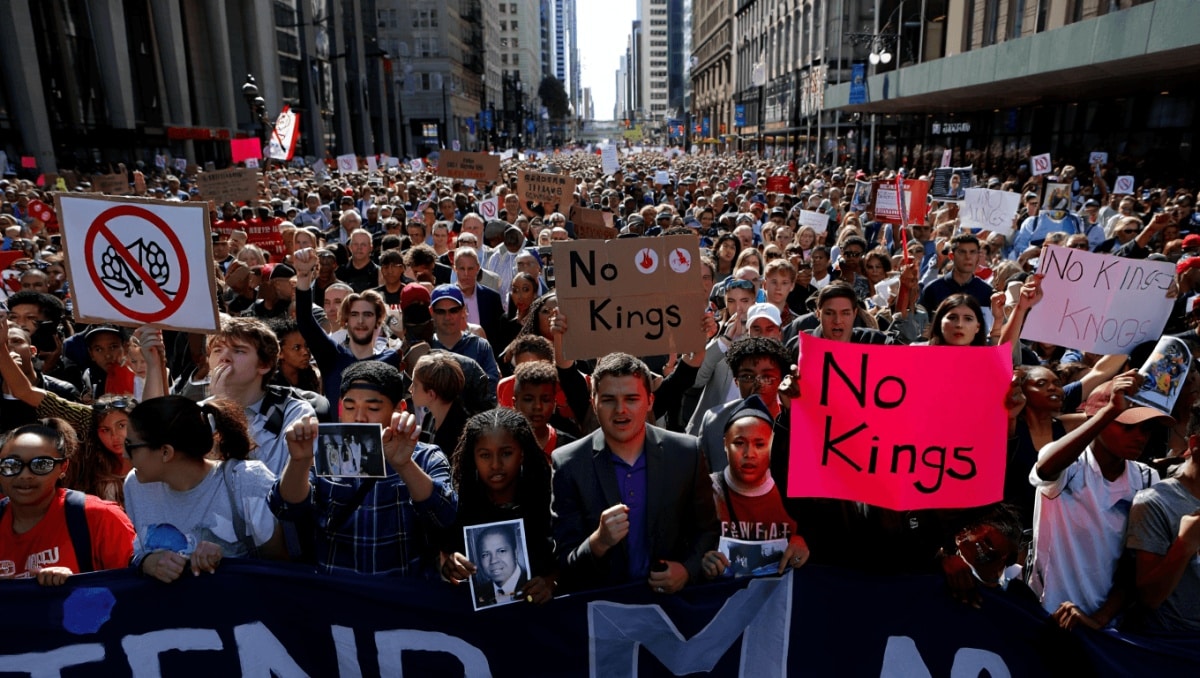
Millions of people took to streets across the country on Saturday under the banner “No Kings,” in what organizers called a nationwide rejection of expanding centralized power. The demonstrations — largely peaceful in most urban centers but confrontational in a few — have thrust questions about the balance of authority and democratic accountability back into the political spotlight.
Organizers reported turnout in the millions, while municipal authorities and independent monitors offered more conservative estimates, a familiar divergence in large-scale civic mobilizations. Regardless of the precise tally, rallies in dozens of cities drew sustained attention and interrupted normal business in several downtown districts.
What protesters are demanding
Participants described a mix of grievances, framed around a single core theme: resistance to perceived overreach by national leaders and institutions. The demands coalesced around three practical aims rather than a single leader or party.
Michael Page dropped from UFC rankings despite victory: what it means for his career
Viral video shows 81-year-old delivery worker struggling with heavy luggage
- Stronger checks on executive authority — calls for clearer legal limits and independent oversight mechanisms.
- Transparency and accountability — demands for open procedures in appointments and decision-making.
- Protection of civil liberties — assurances that emergency powers or new regulations won’t erode free expression or assembly.
The movement’s messaging mixed constitutional language with broader civic concerns: jobs, judicial independence, and media freedoms surfaced repeatedly in chants and placards. In many locations, organizers stressed the demonstrations were not about toppling any one person but about defending institutional restraints.
How the day unfolded
In major capitals, crowds streamed along planned march routes. Local police spoke of largely peaceful conduct, though they reported scuffles in several districts where small groups clashed with law enforcement or blocked traffic. Authorities made a limited number of arrests, citing public-safety incidents rather than the rallies themselves.
Transit systems in several cities adjusted schedules and routes in response to the marches, while downtown business associations reported intermittent disruptions. Social media amplified on-the-ground footage, contributing to rapid reporting but also to conflicting narratives about the tone and size of the events.
Political and legal implications
The protests arrive as lawmakers prepare to debate a package of measures that opponents say would consolidate power within the executive branch. Supporters of those reforms argue they are intended to streamline governance, especially in crises; critics counter that the proposals lack adequate safeguards.
Legal experts caution that even if legislation stalls, the political fallout can be long-lasting: sustained public pressure could force revisions, prompt judicial challenges, or reshape electoral priorities ahead of upcoming contests.
For political leaders, managing the aftermath presents a dilemma. Heavy-handed crackdowns risk escalating tensions and alienating moderate voters, while ignoring the protests could be interpreted as dismissive of widespread concern.
What to watch next
- Legislative calendar: key votes or hearings that could convert protest energy into policy changes.
- Judicial actions: lawsuits or injunctions challenging any enacted measures related to executive powers.
- Local follow-ups: smaller, sustained demonstrations or civil-society campaigns that keep pressure on officials.
Observers also note the movement’s potential ripple effects internationally, as allied democracies and foreign media track developments that touch on rule-of-law standards and institutional resilience.
Organizers say they plan further coordinated actions, though the scale and format remain uncertain. Officials from different levels of government have signaled a willingness to open talks, but no formal negotiations were announced in the immediate aftermath of the rallies.
For citizens, the central question is practical: will Saturday’s mobilization translate into concrete safeguards or policy shifts, or will it fade into episodic protest? The next few weeks — shaped by legislative debates, court rulings and local activism — will determine whether the movement’s message leaves a lasting imprint on governance and public trust.