Show summary Hide summary
When a tornado struck Kankakee on March 10, several high-profile weather streamers on YouTube say they had already warned viewers to take shelter—sometimes hours before local broadcasters began rolling regional coverage. The episode is part of a broader shift: millions of Americans now turn to nationally focused live streams and phone alerts as primary sources for severe-weather information.
A national megaphone for fast-moving storms
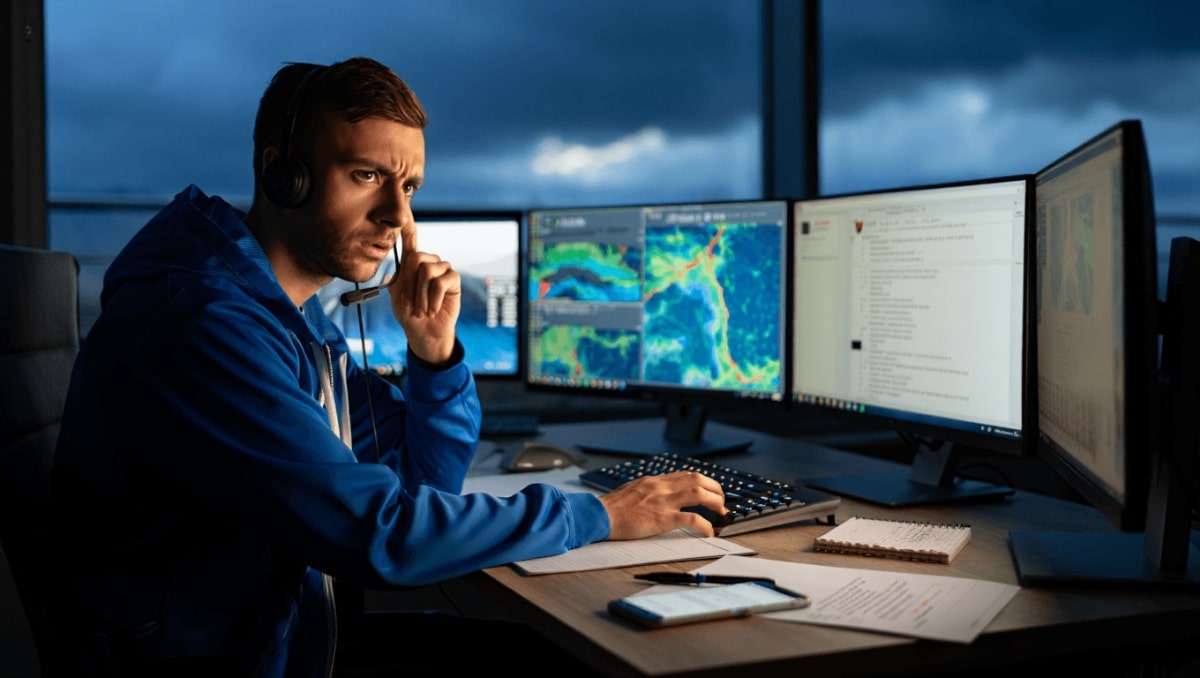
Channels run by Ryan Hall and Max Schuster—known online as RyanHallYall and MaxVelocityWX—draw audiences far beyond any single TV market. As of April 17, Schuster’s channel reported about 1.85 million subscribers and Hall’s about 3.26 million, numbers that underscore why their live streams can influence public response during severe-weather outbreaks.
Unlike local TV stations that focus only on storms inside their licensed area, these creators stream radar and commentary across state lines. That reach allows them to warn viewers in places that traditional broadcasters may not immediately cover.
Michael Page dropped from UFC rankings despite victory: what it means for his career
Viral video shows 81-year-old delivery worker struggling with heavy luggage
When streaming can save lives
Both streamers describe moments that convinced them their broadcasts matter. Schuster has recounted an instance in Michigan where he believes a young viewer learned of an approaching tornado through his broadcast and sought shelter in time. Hall points to the December 2021 outbreak in western Kentucky—where a powerful tornado caused dozens of deaths and hundreds of injuries—as a turning point, when he realized people were relying on his channel for real-time information.
More recently, on April 17, Hall and Schuster each spent hours narrating live storms that moved through the Midwest. Those events included an EF‑2 tornado in Stephenson County, Illinois, that inflicted significant damage to rural communities.
New alert systems, old hazards
Both streamers supplement live coverage with paid notification services that call subscribers when the National Weather Service (NWS) issues a warning for a specified location. Hall’s service, YALLCALL, and Schuster’s Max Alert are built around automated phone calls rather than smartphone push notifications—an intentional choice tailored to the demographic makeup of their audiences.
Hall has said many of his followers are older and prefer voice calls to apps; Schuster has noted that loud phone calls are more likely to wake sleeping people than quieter push alerts. Those practical considerations reflect a simple goal: get people’s attention fast.
- NOAA Weather Radio — Official broadcast network; reliable for continuous alerts but requires owning a receiver.
- Wireless Emergency Alerts (WEA) — Pushes critical NWS warnings to compatible phones automatically.
- Automated phone calls (YALLCALL / Max Alert) — Direct, often louder; favored by some older users and those who want an audible alarm.
- Live streams and social media — Broad reach and real-time commentary; risk of mixed-quality interpretation if not tied to official warnings.
- Local sirens, TV and radio — Time-tested; best used alongside other methods for layered coverage.
How officials view the change
Emergency managers and meteorologists emphasize redundancy. Chris Maier, who coordinates national warning guidance for the NWS, recommends having multiple ways to receive alerts—NOAA radios, push alerts, emails, WEA, and trusted apps among them. These channels are complementary rather than mutually exclusive.
Local first responders say they continue to rely on NWS products and established systems. DeKalb County officials note their internal monitoring practices have not changed fundamentally since the 2015 Fairdale tornado—an EF‑4 event that destroyed much of the small community and claimed two lives—though social media is now another tool for disseminating warnings.
Rochelle’s fire chief recalled the scale of destruction seen in 2015 and stressed the value of accurate, real-time radar and forecasts. “We turn to NWS for both live radar feeds and predictive guidance,” he said, underscoring the agency’s role as a primary source for emergency operations.
Implications for the public
Public-safety officials and NWS program managers acknowledge that digital creators can expand the reach of official warnings. Rather than replacing government channels, many see streamers and alert services as additional layers that can help reach audiences who might otherwise miss a warning.
But the transition carries risks: some people already rely solely on social media for weather updates, which can be problematic if unverified information circulates. The safest posture remains using several, independent alert paths so that if one fails or is missed, another will catch a person’s attention.
For readers wondering what to do now: maintain at least two different alert sources—one that is official (NOAA Weather Radio or Wireless Emergency Alerts) and one that fits your lifestyle (a phone call service, a trusted livestream, or a local alert app). Layering methods increases the chance you’ll receive life-saving notice when severe weather approaches.