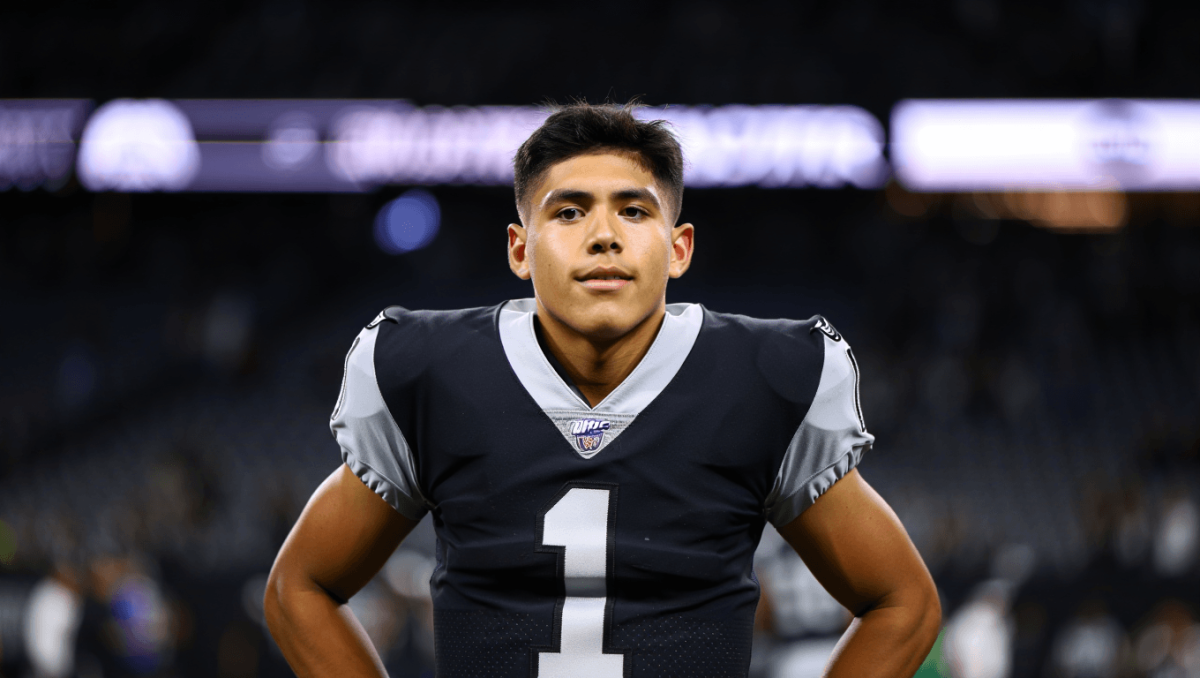
As the draft approaches, the debate over the Las Vegas pick has sharpened: Fernando Mendoza is the apparent consensus No. 1, but a closer look at his profile and the Raiders’ roster suggests the choice is not automatic. The decision matters now because it will shape a franchise that still faces major holes around its presumed franchise quarterback.
Mendoza arrives with headline credentials — a recent Heisman winner, prototypical size and mobility, and the sort of reliable baseline that appeals to teams craving immediate stability at quarterback. Scouts praise his physical traits and football IQ, and those qualities explain why many project him to the top of the board.
Still, there are important caveats. Evaluators have raised questions about whether Mendoza’s decision-making and processing speed will translate immediately to the NFL. That concern is amplified by Las Vegas’ offensive circumstances: their new coordinator, former Seahawks offensive coach Klin Kubiak, runs a sophisticated scheme that could squeeze a rookie quarterback while he learns the pro game.
Michael Page dropped from UFC rankings despite victory: what it means for his career
Viral video shows 81-year-old delivery worker struggling with heavy luggage
Roster context deepens the uncertainty. The Raiders’ offensive line has been porous, and last year’s first-round running back failed to flourish behind poor protection. Wide receiver depth is thin beyond tight end Brock Bowers — a top-level pass-catcher, but still a tight end at a position that typically sees fewer targets than a high-end wideout.
Put simply: drafting a quarterback first overall would be placing a premium on a player who may not receive optimal support in Year 1. That raises a strategic question: should Las Vegas instead use the pick on an impact defender who can change the game immediately?
Trade-offs at No. 1: quarterback vs. impact defender
There are several compelling edge and defensive prospects that could be transformational, players whose value on day one may exceed a quarterback forced to grow behind a weak roster. Names frequently mentioned in this conversation include Arvell Reese, David Bailey and Reuben Bain Jr., each with traits that project to high-level NFL production.
- Strengths Mendoza offers
Size (6’5″, 235 lb), arm talent, mobility to extend plays, and a veteran-level decision-making baseline. - Key concerns
Questions about processing speed at NFL pace and the risk of a slow rookie transition in a complex offense. - Why an edge rusher appeals
Immediate disruption, clearer match between collegiate traits and pro role, and less dependency on surrounding roster upgrades. - Alternatives to consider
Arvell Reese, David Bailey, Reuben Bain Jr. — prospects viewed as potential up-front difference-makers on defense. Also discussed are collegiate standouts like Sonny Styles and Caleb Downs, whose positional value complicates their draft stock but whose readiness can be attractive.
The NFL rewards elite quarterbacks, but recent champions illustrate another truth: deep rosters built around a competent passer often beat top-heavy teams relying on a single expensive skill position. Philadelphia and Seattle reached the highest level by surrounding their signal-callers with dynamic supporting pieces rather than leaning solely on the QB.
For Las Vegas, timing and cap management are real constraints. Investing the franchise tag and future cap space in a quarterback before the rest of the roster is competitive could mean overpaying for a player whose supporting cast arrives slowly. Conversely, selecting an edge rusher or other defensive cornerstone would be less headline-grabbing but might accelerate a return to contention.
Neither path is risk-free. A quarterback selected first overall can become the face of a franchise; a defensive star can alter a team’s identity and win more games immediately. The calculation comes down to how the Raiders weigh immediate roster needs against long-term franchise-building priorities.
With draft day on the horizon, Las Vegas faces a classic draft dilemma: take the safe, well-rounded quarterback and hope coaching and time bridge the gaps, or choose a blue-chip defensive piece that provides instant value and buys time to build around a future QB. Either way, the pick will define the next phase of the Raiders’ rebuild.