Show summary Hide summary
SK Hynix staged one of the largest U.S. listings by a foreign firm this week, a move that underlines how surging demand for AI-ready memory is reshaping the global chip market. The deal, and the broader rush of tech IPOs, matter because they signal where investment and production capacity will flow next—and how quickly memory prices and supply chains could change for consumers and businesses.
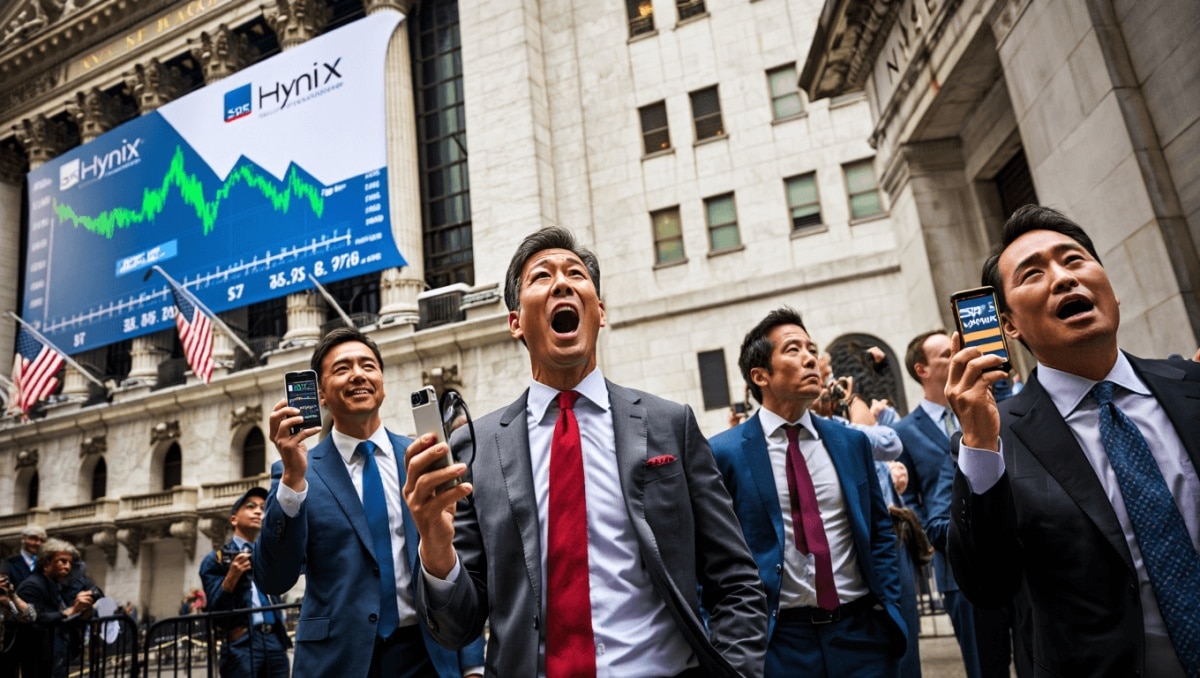
On Thursday the company priced its American depositary receipts at $149 apiece; trading began the next day near $170 and finished around $168. That placement—177.9 million ADRs—brought in roughly $26.5 billion, a record amount for an initial U.S. share sale by an overseas issuer.
SK Hynix’s listing comes amid an unusually active quarter for public offerings. Investment tracker Renaissance Capital counted 48 IPOs in the last quarter, raising about $104.8 billion, the largest quarterly haul in five years in part because of a single, very large private listing that dominated proceeds.
Brewers emerge as top suitor for Tarik Skubal in blockbuster trade talks
US stocks sit 0.5% below record as oil surges: investors shrug off rising energy costs
Why memory makers are at the center of the AI boom
SK Hynix is a key supplier of high-bandwidth memory, a component that AI systems rely on to move large data sets between processors quickly. That technology has become a scarce and valuable input as companies race to expand AI infrastructure worldwide.
The firm has deepened ties with chip designers, including a recent partnership with Nvidia to supply advanced memory chips for AI applications—an alignment that highlights how memory vendors and AI platform makers are now tightly interdependent.
- ADRs priced: $149 each; opened near $170, closed about $168
- Shares offered: 177.9 million ADRs
- Proceeds raised: ≈ $26.5 billion (largest U.S. initial offering by a foreign company)
- U.S. revenue share: ~68.8% of SK Hynix’s sales last year
- 2025 results: Revenue close to $65 billion; net income roughly $28 billion
- Planned U.S. expansion: first production plant in Indiana
Supply, pricing and consumer impact
Rising demand for memory has tightened supplies and pushed prices higher, a trend that has rippled into consumer electronics. Apple recently cited higher memory costs when adjusting prices for Macs and iPads, an example of how component shortages can feed through to end users.
For chipmakers, higher margins on memory have translated into sharply rising valuations. Micron’s stock surged in 2025 and continued strong momentum into 2026; Nvidia experienced similar rapid gains earlier in the AI cycle. Together, these companies have driven much of the recent market rally in the tech sector, helping major indexes reach new highs.
Domestic investment and global strategy
Beyond public markets, SK Hynix is part of a broader industrial push in South Korea. The company, along with Samsung and government planners, announced a plan to channel about 800 trillion won into a new semiconductor hub in the country’s southwest—an effort to spread investment outside the Seoul metro area and anchor next-generation chip production at home.
At the same time, the U.S. market remains crucial: last year nearly seven out of ten dollars in SK Hynix sales came from U.S. customers. Building a factory in Indiana signals a strategic pivot toward onshore capacity that could ease supply risks for American buyers and align with industrial policies favoring domestic semiconductor production.
Market reaction was muted in Seoul: shares of SK Hynix slipped about 0.3% on Friday, reflecting a mix of profit-taking and the broader dynamics in global chip equities.
For investors, manufacturers and policymakers, the implications are clear: memory capacity is now a strategic asset for the AI era, and where companies raise capital and build factories will influence the pace of AI deployments—and the prices consumers ultimately pay.