Show summary Hide summary
U.S. strikes on Iran’s Kharg Island and a midday explosion in central Tehran during a state-organized rally have sharply increased regional tensions, threatening shipping through a crucial oil corridor and risking further civilian harm. With American Marines redirected to the Middle East and daily Iranian missile and drone launches continuing, the conflict is producing immediate economic and humanitarian consequences.
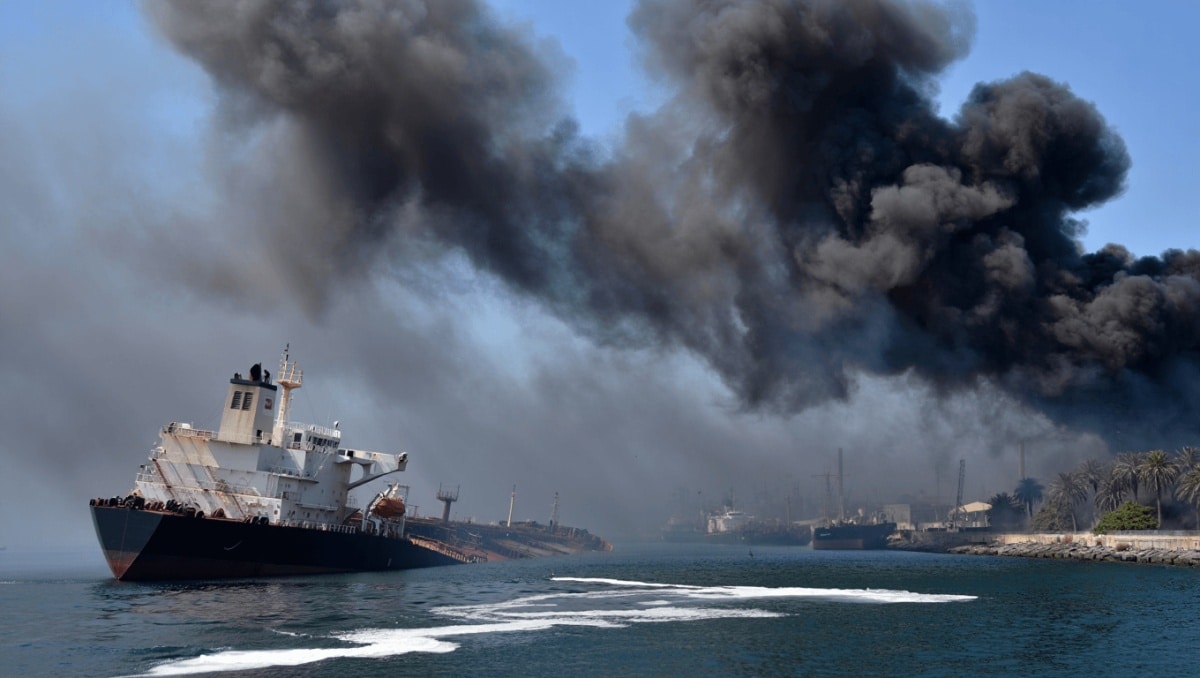
Strikes on Kharg Island, warning on oil facilities
U.S. forces say they struck military targets on Kharg Island, a key node for Iran’s oil exports, while deliberately sparing the island’s petroleum terminals for now. President Donald Trump, however, warned that Tehran’s oil infrastructure could be targeted if the movement of commercial shipping through the region is disrupted.
Michael Page dropped from UFC rankings despite victory: what it means for his career
Viral video shows 81-year-old delivery worker struggling with heavy luggage
Iran’s parliamentary speaker had earlier cautioned that attacks on southern islands would trigger a new, more intense phase of retaliation — comments that underline how central those facilities are to Iran’s economy and security calculations.
Explosive blast during Quds Day rally in Tehran
An explosion shook Ferdowsi Square in Tehran where thousands had gathered for the annual Quds Day demonstration. The rally, a focal point of state messaging against Israel and the U.S., included senior officials and the head of Iran’s judiciary.
There were no confirmed casualties reported from the blast. Iranian authorities had severely restricted internet access during the event, limiting the ability of many residents to receive warnings issued in Farsi by Israel shortly before the explosion.
U.S. forces repositioned
Elements of the 31st Marine Expeditionary Unit and the amphibious assault ship USS Tripoli have been ordered toward the Middle East, U.S. officials say. These Marine units are trained for a range of missions — from evacuation and embassy security to amphibious operations — but their deployment does not by itself indicate an imminent ground invasion.
Carrier strike groups and destroyers already operating in the Arabian Sea would be reinforced if Tripoli joins them, increasing U.S. naval firepower in the region. Satellite imagery shows the Tripoli was operating near Taiwan days earlier, suggesting it will take time to reach Persian Gulf waters.
Escalation across the region
Iran has continued sustained missile and drone attacks against Israel and Gulf targets and has effectively restricted traffic through the Strait of Hormuz, a chokepoint for roughly one-fifth of global traded oil. U.S. and Israeli aircraft, meanwhile, have struck military and infrastructure targets inside Iran.
Defense officials in Washington say more than 15,000 hostile targets have been struck since the conflict began — an average exceeding 1,000 a day — as allied forces attempt to degrade missile launchers, air defenses and weapons-production facilities.
- Shipping risk: Further strikes on maritime infrastructure could imperil global oil shipments and raise fuel prices.
- Civilian impact: Ongoing strikes in Lebanon and across Gaza have created a widening humanitarian crisis, with hundreds killed and hundreds of thousands displaced.
- Military posture: Additional U.S. naval and Marine deployments increase deterrence but also raise the risk of broader encounters at sea or in the air.
Human toll and recent incidents
Conflict across Lebanon and southern Syria has intensified. Israeli operations targeting Iran-backed groups have coincided with mounting civilian casualties; Lebanese health authorities report hundreds killed and very large population displacements during the recent fighting.
The U.S. military confirmed all six crew members aboard a KC-135 refueling aircraft died after it crashed in Iraq, bringing the American death toll related to the campaign to at least 13 service members. U.S. Central Command said the crash was not caused by hostile or friendly fire.
Attacks and interceptions continue
Iranian forces have launched frequent strikes on infrastructure across the Gulf. In Oman, two people were killed when drones crashed in the Sohar region. U.S. naval vessels have intercepted and shot down ballistic missiles launched toward the region, including an interception over Turkey.
Fighting between Israel and Hezbollah has also escalated. Reports from Lebanese authorities indicate dozens of fatalities in recent strikes, including medical personnel, and mounting civilian casualties and infrastructure damage in southern Lebanon.
Why this matters now
For global markets and local populations alike, the stakes are immediate: disruptions at sea could ripple into higher fuel costs worldwide, while continued strikes and counterstrikes raise the risk of wider regional warfare and prolonged humanitarian crises. Military repositioning by the U.S. signals readiness to protect shipping and personnel, but it also increases the complexity of an already volatile situation.
Readers should watch for signs that commercial passage through the Strait of Hormuz resumes or further attacks target oil facilities — developments that would have broad economic and security consequences.