Show summary Hide summary
County officials across northern Illinois have largely pointed to state lawmakers as the solution to a controversial practice at backyard rodeos—but recent criminal filings in McHenry County suggest prosecutors can still bring serious charges. The developments put pressure on legislators and local authorities to clarify what conduct is illegal and what protections exist for animals and the public.
Criminal charges in McHenry raise the stakes
After an Aug. 16, 2025, Mexican-style rodeo near Woodstock, the McHenry County Sheriff’s Office opened an investigation that led to charges announced Oct. 15, 2025.
Michael Page dropped from UFC rankings despite victory: what it means for his career
Viral video shows 81-year-old delivery worker struggling with heavy luggage
Five people were charged with animal cruelty, and court documents accuse four of them of pulling a steer’s tail with such force that the animal suffered a degloving injury—a wound where skin was torn away from underlying tissue. Another participant faces a separate cruelty charge alleging repeated kicks to a downed steer.
McHenry County’s state’s attorney has not commented publicly on the pending cases.
What is steer-tailing?
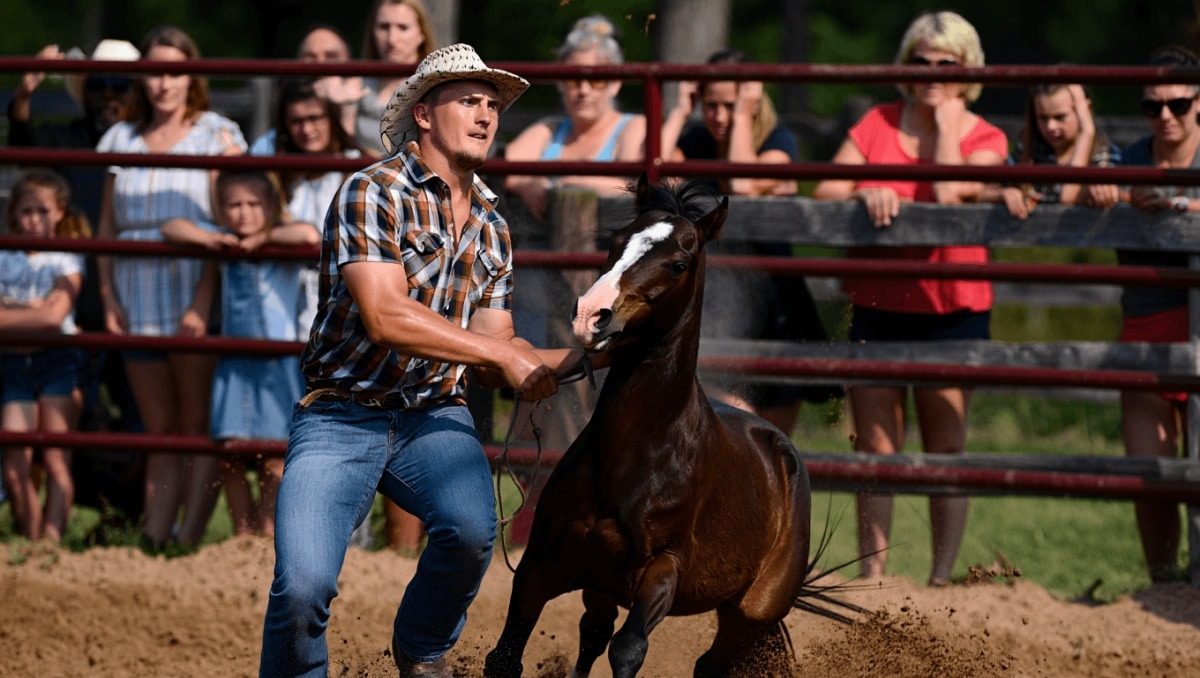
Steer-tailing, also called coleadero, is a rodeo maneuver in which a rider pursues a running steer, grabs its tail and uses it to trip and topple the animal. The event has been outlawed in Nebraska and in parts of California and Colorado.
The practice is central to complaints from animal welfare advocates who say it routinely causes injury and suffering.
Evidence and local investigations
Chicago-based animal protection group Showing Animals Respect and Kindness (SHARK) has recorded and shared footage of multiple events in Will, Boone, Ogle, DeKalb and McHenry counties. Review of that material by reporters found images that appear to show animals being struck, prodded, tripped, injured and, in some cases, having tails cut or otherwise damaged.
Responses from county law enforcement have varied: some opened investigations, others pursued different charges linked to rodeos, and at least one county filed criminal complaints against an advocate who documented the events.
- Investigations and charges: McHenry has criminal filings tied to an August 2025 rodeo; DeKalb pursued a separate prosecution against a permit holder.
- Enforcement tools: Officials point to the Illinois Humane Care for Animals Act but say it lacks explicit language targeting steer-tailing.
- Permitting systems: County permit rules differ widely, which affects how easily events can be halted or regulated.
Why prosecutors say the law is unclear
Illinois law bans beating, tormenting, starving, overworking or otherwise abusing animals and requires caretakers to provide adequate food, water and veterinary care. But several county prosecutors and administrators say the statute does not explicitly name or define steer-tailing, making prosecutions harder in some cases.
Ogle, Will and DeKalb county prosecutors have described the gap as a legislative shortfall: without a specific prohibition, they must fit conduct into broader cruelty or owner-duty charges and prove those elements beyond a reasonable doubt.
State Sen. Rachel Ventura (D-Joliet) introduced a bill to ban steer-tailing on Jan. 13, 2025. That measure has not advanced to a floor vote, though the Illinois Senate did pass a nonbinding resolution on Oct. 15, 2025, condemning the practice and recognizing an animal welfare observance. Resolutions express opinion and do not create enforceable law.
Ventura has said lawmakers drafted the bill after animal welfare groups urged state action following limited movement at the local level.
Different county approaches — and mixed results
Counties have taken a patchwork of steps in response to rodeos.
In Will County, investigators pressed livestock suppliers about interstate health paperwork in 2024, a move that prompted a vendor to pull back for fear of federal regulatory trouble. DeKalb County prosecuted a permit-holder, Cristofer Perez, for violations tied to two 2024 events; he pleaded guilty in April 2025, was fined and placed under court supervision.
Yet that conviction did not stop Perez from receiving another permit and staging a rodeo at the same rural property in August 2025. County officials say the legal framework around permits and court orders limits what they can do absent a clear statutory prohibition.
Ogle County’s long-standing rodeo permit, first issued in 2012, remains valid as long as events continue twice a year and can be revoked only by a county board vote demonstrating permit breaches. DeKalb and McHenry use temporary-use permits that the community development or planning director issues for individual events; those permits can include conditions but are not necessarily subject to board approval.
What this means going forward
The McHenry charges show prosecutors can pursue serious cruelty allegations when investigators find evidence of severe harm. At the same time, local officials say durable change will likely require clearer state law that specifically addresses rodeo practices such as steer-tailing.
Pending court outcomes in McHenry and continuing legislative activity will influence how counties approach similar events. For now, the situation remains a mix of local enforcement, permit rules and a contested legal landscape at the statehouse.