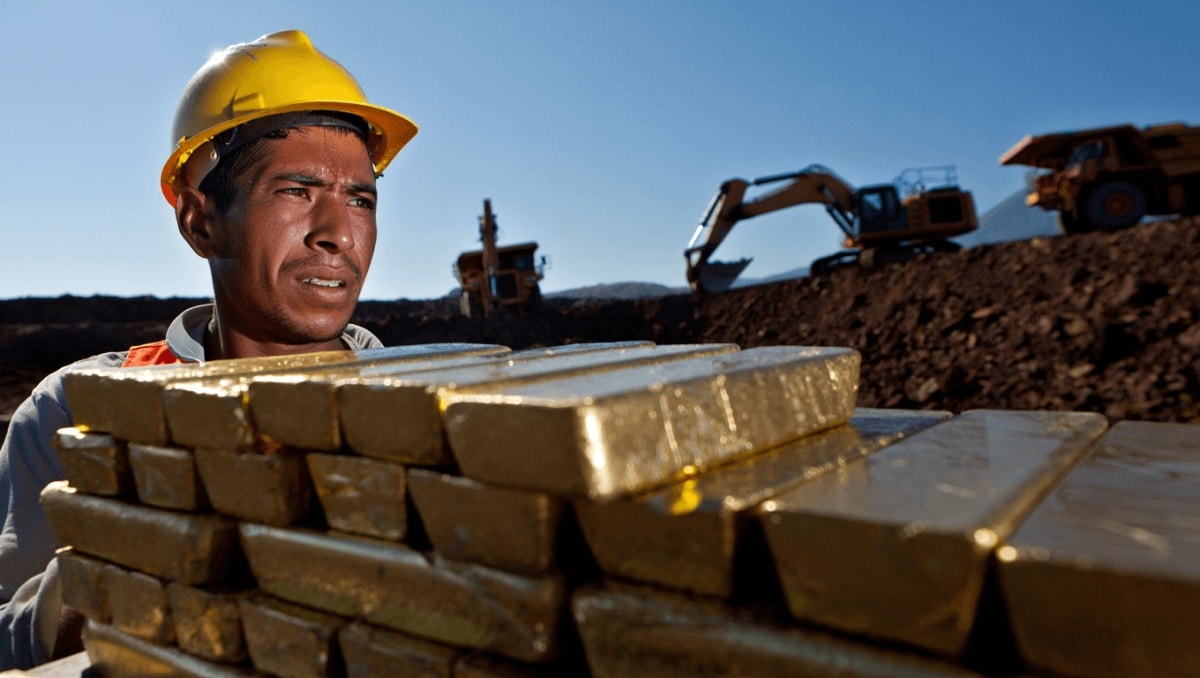
The U.S. government has granted a narrow license allowing American mining interests to engage with Venezuela’s state miner after high-level talks in Caracas, a move Washington says is aimed at securing access to valuable raw materials and encouraging investment amid lingering security concerns. The decision follows meetings between U.S. Interior Secretary Doug Burgum, Venezuela’s acting president and representatives of more than two dozen U.S. mining firms.
During Burgum’s visit, Venezuelan officials reportedly promised steps to protect foreign workers and operations in mineral-rich regions that for years have been contested by guerrilla groups, criminal gangs and other armed actors. U.S. officials framed the authorization as a strategic measure to reduce dependence on foreign suppliers of key commodities and to attract experienced operators back into the country.
- Scope of the license: Limited permission for U.S. individuals and companies to pursue mining activities in coordination with Venezuela’s state mining company, Minerven.
- Excluded parties: Entities and nationals from Russia, Iran, North Korea and Cuba remain barred from signing contracts with Minerven.
- Security assurances: Venezuelan authorities pledged measures intended to improve safety for investors and staff in historically volatile mining zones.
- Geopolitical aim: The move is presented as part of U.S. efforts to weaken global reliance on Chinese supplies of critical minerals.
Michael Page dropped from UFC rankings despite victory: what it means for his career
Viral video shows 81-year-old delivery worker struggling with heavy luggage
U.S. officials emphasized that the authorization is not an open-ended reopening of Venezuela’s resources to all foreign actors. Instead, it is framed as a controlled pilot to test whether international firms can operate safely and transparently under new guarantees from Caracas.
Analysts say the stakes are high: Venezuela sits on deposits of minerals that are essential for electric vehicles, batteries and other low-carbon technologies, making access a strategic priority for manufacturers and governments alike. Restoring lawful, large-scale mining would also offer Caracas a path to foreign revenue—but it demands meaningful improvements in on-the-ground security and governance.
At the same time, Washington has pressed its legal advantage in Venezuelan hydrocarbons. The U.S. moved to claim ownership of a sanctioned tanker and nearly 2 million barrels of oil seized off Venezuela’s coast last December, and in January Caracas enacted legislation opening parts of its oil sector to private investment.
The license comes amid sweeping political shifts in Venezuela after recent events that altered the country’s leadership dynamics. U.S. officials portray the step as part of a broader strategy to stabilize the economy and counter non-U.S. influence over critical raw materials—yet many details remain unsettled, including timelines for projects, the exact security guarantees and how Venezuelan communities will be affected.
For mining companies weighing a return, the calculus will hinge on concrete protections, clarity around permitted activities and whether international scrutiny and oversight can keep operations out of the hands of armed groups. The next weeks are likely to reveal whether the authorization translates into rapid investment or remains a cautious, limited opening.