Show summary Hide summary
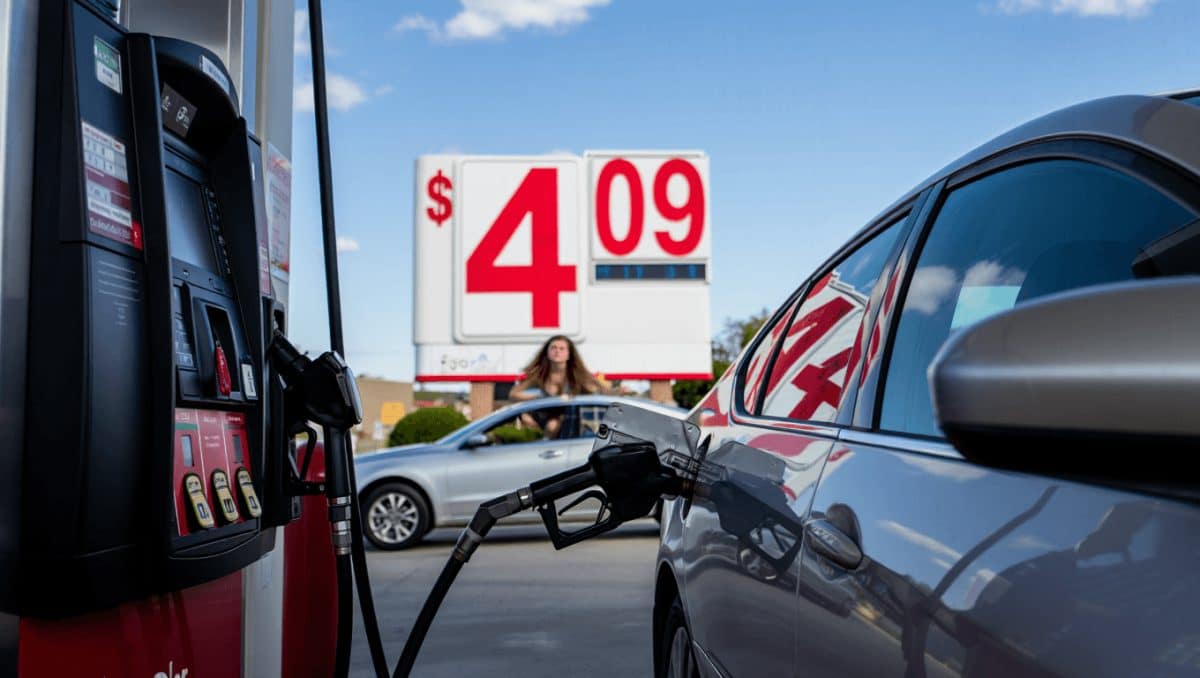
U.S. pump prices have climbed back above $4 a gallon as renewed conflict in the Middle East disrupts crude flows, pushing immediate pain onto drivers and supply chains. The rebound matters now because higher fuel costs ripple through household budgets, freight bills and could become a political flashpoint ahead of November’s midterms.
Where prices are headed and why
The national average for a gallon of regular gasoline has edged above $4, about a dime to two higher than last week and well above the roughly $3.14 average from a year ago. Behind that jump is a recent rise in crude oil prices after volatility tied to renewed hostilities involving the U.S., Israel and Iran.
Prices vary widely across states. Coastal and high-tax states are seeing the steepest increases, while interior states remain relatively cheaper. Refinery purchasing cycles and shipping delays mean changes in oil markets take time to show up at retail pumps.
Trump tariffs target forced labor: could they quietly sidestep Congress?
Celtics’ grip on the East teeters after recent losses
- National average: just above $4 per gallon
- Highest state averages: California near $5.50, Hawaii about $5.42, Washington around $5.01
- Lower-price states: examples include Indiana and Mississippi in the mid-$3 range
- Crude benchmark: Brent crude recently trading in the mid-$80s to low-$90s per barrel, up from roughly $72 in early July
- Diesel: approaching $5.11 per gallon, adding pressure to freight costs
Oil markets have been erratic since the conflict began. Earlier this year Brent briefly spiked toward $120 a barrel, and U.S. retail gasoline reached four-year highs in May. Even after short-lived dips, the path back to lower prices is uncertain.
What officials say and the logistical outlook
The White House has stressed that restoring safe passage for commercial vessels and degrading capabilities that threaten shipping would relieve market pressure and bring fuel costs down. Officials argue that U.S. energy production and strategic actions should blunt the price effects over time.
Analysts, however, caution that maritime traffic remains constrained. Analysts at S&P Global Energy reported a roughly 50% drop in vessel transits through the Strait of Hormuz in the most recent week compared with the prior week, and noted shipowners are avoiding certain routes out of caution.
Even under a ceasefire scenario, experts warn that repairing production and logistics networks could take months or longer. S&P Global Energy has suggested Gulf oil output may not return to pre-conflict levels before early 2027, implying a prolonged period of elevated energy prices.
Wider economic consequences
Rising fuel costs are not limited to retail gasoline. Diesel — a key input for trucking and rail freight — has climbed as well, increasing costs for moving goods. Researchers tracking the economic effect estimate American households have absorbed tens of billions in additional fuel expenses since hostilities began.
Higher fuel bills feed through into other prices: grocery bills, airfares, and many everyday goods become more expensive when transportation and input costs rise. Some sectors have also reported shortages of commodities such as fertilizer, amplifying pressure on food prices in regions dependent on imports from the Middle East.
Regions that import a larger share of their energy from the Gulf — including parts of Asia and Africa — feel the shock more acutely. For U.S. consumers, the near-term outlook suggests continued volatility at the pump and creeping inflation in items tied to fuel costs.
Bottom line
Short-term market moves and the course of the conflict will determine whether prices retreat or stay elevated. For now, the combination of disrupted shipping, higher crude benchmarks and constrained supply points to a period of renewed strain for consumers and businesses alike — with political and economic consequences that could extend into next year.