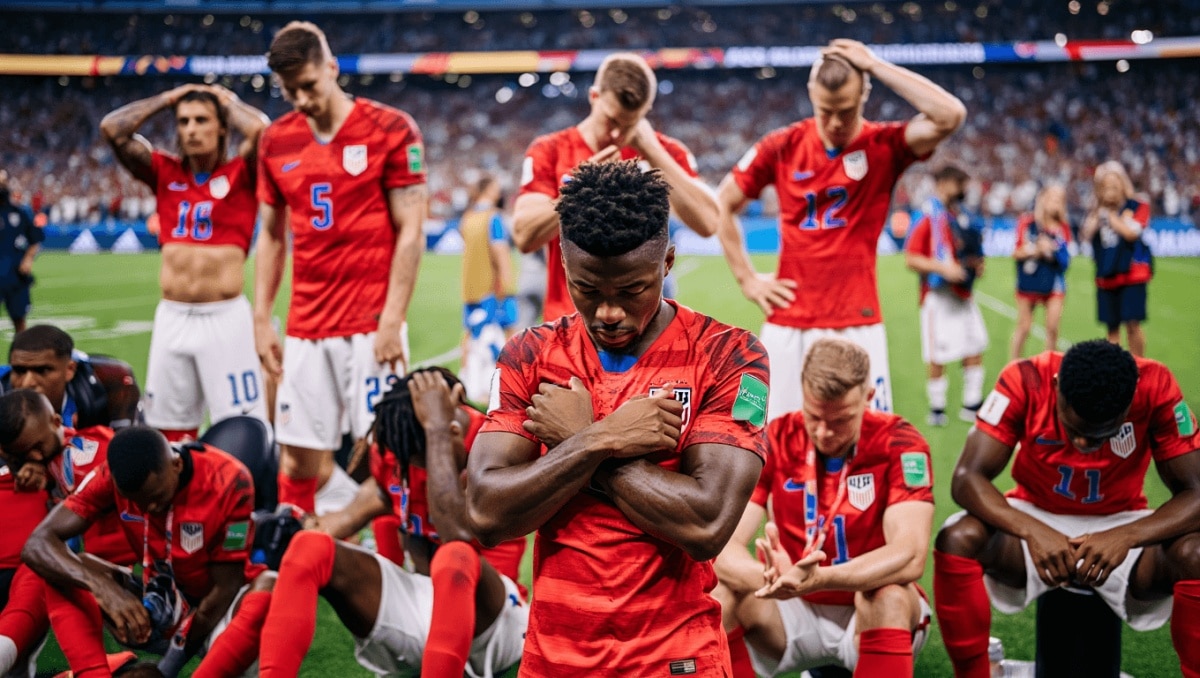
A disputed disciplinary decision that cleared Folarin Balogun to play has become more than a sporting controversy — it’s a test of how the United States now inserts itself into global football. The episode, marked by allegations of high-level political pressure and an opaque change to a ruling, has immediate implications for reputation, competition and how the U.S. is seen by peers.
Reports circulating this week say a senior political figure lobbied FIFA over the player’s eligibility, and FIFA has denied any improper influence. Still, the sequence — a reversed or altered decision issued with little explanation — has drawn loud celebration at home and sharp skepticism abroad.
Why this matters now: if a major soccer decision can be affected by diplomatic or political leverage, the sport’s integrity and the U.S. team’s standing in marquee matches are both at stake.
Manteno: inspectors verify Gotion has a staffed fire brigade on site
Shanahan’s 49ers surge: Rams and McVay left scrambling
Most soccer powers in Europe measure their strength through dense, well-funded domestic competitions. Clubs there dominate the calendar, attracting top players and commercial investment; success is built inside the club system rather than through last-minute national interventions.
By contrast, nations whose club systems export talent to Europe treat international tournaments as the apex of achievement. For them, the World Cup—or any high-profile international tie—can carry outsized political and symbolic importance, tempting leaders to intervene when national pride is perceived to be on the line.
The current controversy exposes a different path the U.S. is taking: not one of club-based dominance on par with Europe, but one of influence exercised by money, politics and international relationships. That model wins headlines and short-term victories, but it can create long-term costs.
Those costs are both concrete and psychological. Here are the main consequences to watch:
- Reputational risk: Perceptions of favoritism erode trust in governing bodies like FIFA and can make future U.S. successes feel tainted abroad.
- Competitive pressure: Players and coaches face extra scrutiny and suspicion — opponents may play with heightened motivation, and officiating crews may overcompensate to avoid perceived bias.
- Institutional precedent: If political interventions appear effective, other nations may escalate similar tactics, complicating governance and fairness in international competitions.
- Fan reaction: Domestic celebration can deepen divisions between supporters who value results above process and those who worry about the integrity of the game.
Historically, political meddling in football is not new. Leaders from various regions have tried to influence federations or match outcomes when national prestige was at stake. What stands out in this instance is the combination of a powerful domestic market, intense media scrutiny and the U.S.’s growing desire to be taken seriously on football’s biggest stages.
That ambition has concrete roots. American interest in soccer has swelled thanks to rising attendance, TV deals and Major League Soccer’s expansion. But the U.S. still lacks the depth of elite club competition that defines football powerhouses in Europe. Because Europe’s strongest leagues cultivate talent and gravitas across seasons and tournaments, those countries rarely need to rely on political shortcuts to assert themselves internationally.
Two practical outcomes could flow from the current episode. First, the U.S. team may play under a cloud of controversy, whether through heightened scrutiny from referees or extra psychological pressure on the squad. Second, international perceptions of U.S. football could harden, making cooperative relationships with other federations and neutral arbitration bodies more fraught.
Coaches and players have little control over politics; their task is preparation. But federations do control messaging and process transparency. Clearer explanations from governing bodies about disciplinary procedures and decision-making would reduce suspicion and help preserve competitive legitimacy.
At stake is more than a single match. If the United States wants to be accepted as a footballing power on European terms, the route still runs through robust domestic competition, consistent development pathways and institutions that aren’t seen as subject to ad hoc political pressure. Shortcuts that produce headlines may win one game, but they risk undermining the longer project of being respected worldwide.
The Balogun case is a reminder: international sport thrives on clear rules and impartial processes. When those elements appear compromised, the consequences quickly ripple beyond a scoreboard — affecting diplomacy, fandom and the sport’s credibility at large.