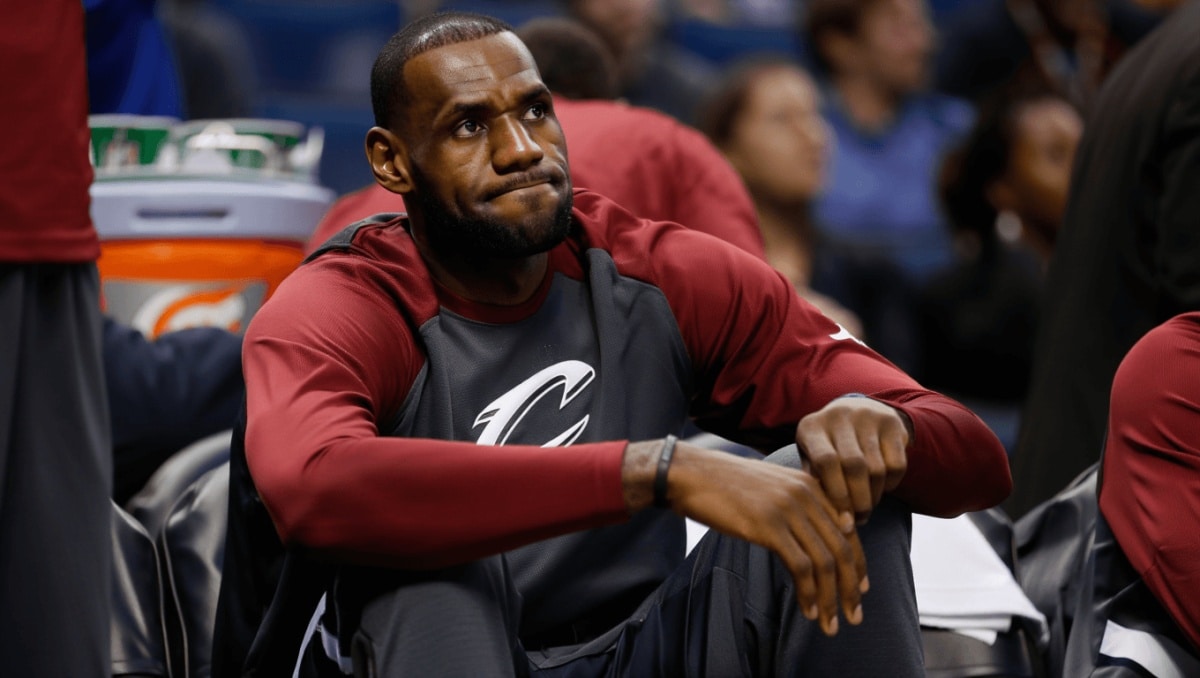
LeBron James’ next move could reshape the NBA landscape and decide where the 20-year-plus career of one of the game’s defining players ends. Reports tying him to Miami, Philadelphia and Cleveland matter now because each destination would change championship math, roster construction and the Cavs’ longer-term plans.
Talk of a final contract has grown louder this week as teams jockey for position. None of the options is a clear slam-dunk — each comes with tradeoffs that could determine whether LeBron chases one more ring, chases legacy, or simply returns home for a ceremonial finish.
Miami offers immediate title upside. Pairing LeBron with a defensive anchor like Bam Adebayo and another top-tier scorer would create a fast pathway to contention for the Heat, who already have the culture and playoff experience to absorb a veteran of James’ stature. The risk: adding another high-usage star can complicate spacing and ball distribution, and Miami’s window has been tested by chemistry questions in recent championship runs.
Brewers emerge as top suitor for Tarik Skubal in blockbuster trade talks
US stocks sit 0.5% below record as oil surges: investors shrug off rising energy costs
The 76ers represent a different calculus. A union centered on Joel Embiid would boast elite interior scoring, but it would also rear up familiar concerns: Embiid’s availability and the fit of additional ball-dominant wings. Philadelphia could be a title competitor on paper, but the experience might be fraught if injuries or role overlap limit playoff cohesion.
And then there’s Cleveland. A homecoming checks emotional boxes and would close a circle for LeBron — yet the fit on the current roster is awkward. The Cavs already feature a strong core of bigs and scorers: Jarrett Allen, Evan Mobley, Donovan Mitchell and James Harden. That quartet has the pieces to win, but adding LeBron without broader roster changes risks creating defensive holes and forcing uncomfortable rotations.
Put plainly: signing LeBron could prevent Cleveland from fielding its ideal five. He still influences games at a high level, but he no longer provides the wing defense and perimeter containment that some matchups demand. That leaves two clear paths for the Cavs — keep the current nucleus and maintain balance, or move pieces to build a LeBron-compatible lineup.
- Heat — Pros: Ready-made culture, playoff toughness, quick title window. Cons: Role compression, potential ball-handling logjam.
- 76ers — Pros: Star frontcourt, dominant paint presence. Cons: Health risk, overlapping usage with other scorers.
- Cavaliers — Pros: Home narrative, established core. Cons: Defensive mismatch at small forward, need for trade adjustments.
If Cleveland pursues LeBron seriously, expect trade discussions to follow. Names floated around the league — players like Michael Porter Jr., Trey Murphy III and Jaden McDaniels — illustrate the type of wing/spacing pieces that could make a Cavs-LeBron combination function. Other teams could offer veterans with defensive chops: Terance Mann, Herb Jones or Donte DiVincenzo have been mentioned in industry chatter as plausible fits in a package built around Mobley or other assets.
There’s a simple arithmetic to the decision: do the Cavs sacrifice depth and defensive versatility to add one of the greatest scorers in history, or do they preserve a more balanced roster that might be better equipped to navigate modern playoff matchups? Teams that trade to acquire LeBron would be betting on his continued playmaking and late-career scoring; teams that pass would be wagering on depth and matchups.
Two additional points are worth noting. First, LeBron is not planning a shell of a season — he still moves the needle commercially and competitively, and his presence reshapes opponents’ game plans immediately. Second, this choice will influence the offseason dominoes: which veterans move, which draft assets are exchanged and how quickly contenders try to retool around him.
The final decision will be part basketball calculus, part biography. Whether he chooses Miami’s quick tilt at another title, Philadelphia’s frontcourt experiment or a sentimental return to Cleveland, the move will reverberate through the summer and set the tone for the next era of the league.