Show summary Hide summary
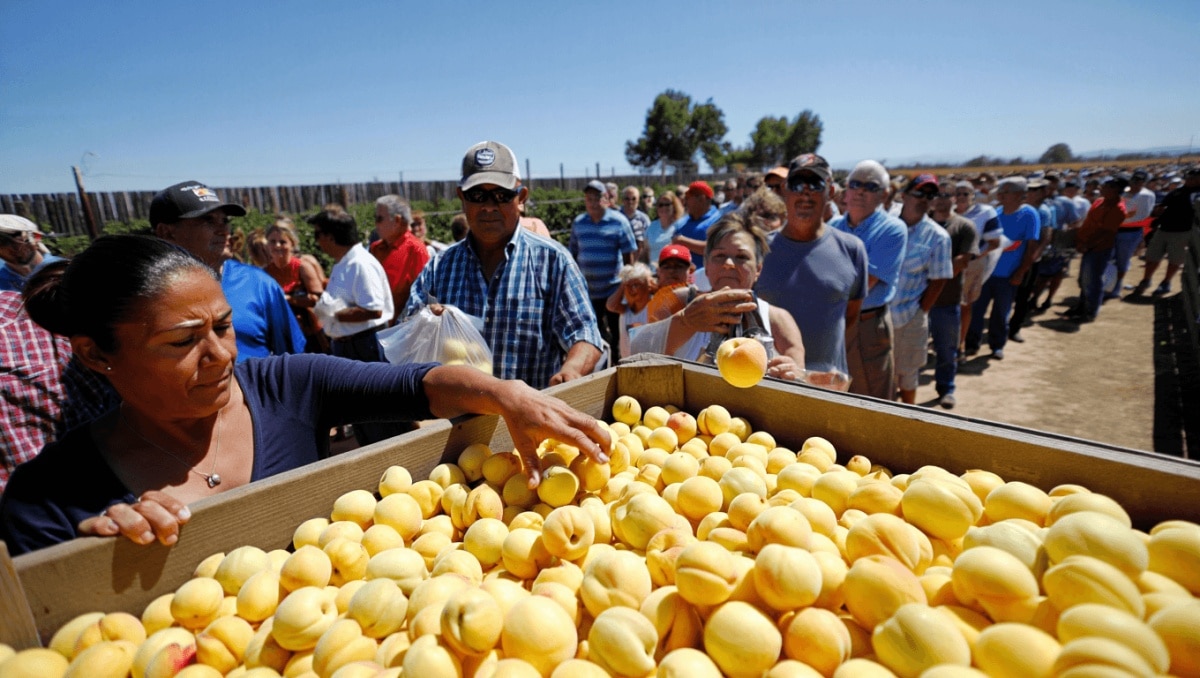
Thousands have lined up at a Central Valley farm this week to collect free white nectarines as a Reedley grower gives away his crop rather than let it spoil while he fights a lawsuit over who controls the fruit variety. The dispute — and a trial set for later this month — could reshape how exclusive rights to new fruit varieties are enforced and what that means for small farmers’ livelihoods.
Since Monday, Cesar Mora says he has handed out more than 100,000 pounds of nectarines from his property, drawing long lines of locals eager for the sweet fruit. Mora, a third-generation grower, describes the move as a way to avoid waste and to put his harvest into people’s hands while the courts determine what happens next.
What the lawsuit alleges
Michael Page dropped from UFC rankings despite victory: what it means for his career
Viral video shows 81-year-old delivery worker struggling with heavy luggage
The legal fight centers on a white nectarine known commercially as Monalise. Mora is being sued by Giumarra Brothers Fruit Co., which says it holds exclusive marketing rights under agreements with a European breeder and that Mora violated those terms by selling fruit to other packers.
In filings, Giumarra says rights to the variety belong to Star Fruits Diffusion, a French company that licenses new varieties to marketing partners; Giumarra asserts it has the authority to sublicense the fruit for testing, production and sale. Star Fruits Diffusion did not respond to requests for comment.
Mora counters that Giumarra engaged in unfair business practices and that the company failed to produce licensing paperwork he requested. He also says that past handling by the marketer — including alleged dumping of fruit — hurt his bottom line, claims Giumarra disputes. A judge has allowed the breach of contract claim to move forward, ruling the agreement between Mora and Giumarra can be enforced even if a U.S. plant patent does not exist.
How the agreements were structured
Court documents show Mora signed a sublicensing agreement in 2017 to grow Monalise, followed by a 2019 marketing deal that required fruit to be packed and sold through Giumarra. Under those contracts he agreed to pay a one-time fee per tree and a production royalty tied to sales, plus a commission on sales.
When Mora stopped using Giumarra as his marketer in 2023 and sold fruit to a different packer, Giumarra responded with the lawsuit, effectively blocking him from selling the crop while the case proceeds. Mora says the litigation has cut his farm income by roughly a quarter and sapped his enthusiasm for farming.
Why this matters beyond one farm
The case highlights a broader trend: increasing use of exclusive licenses and patents for fruit varieties, and mounting tensions between breeders, large marketers and independent growers.
- Grower finances: Exclusive licensing can add upfront and ongoing costs and limit where and how farmers sell their harvest.
- Market control: Companies that secure exclusive rights can centralize packing and distribution, shaping which orchards profit from new varieties.
- Legal uncertainty: Disputes over licensing paperwork, territorial restrictions and royalty calculations can lead to prolonged litigation, with crops left unsold in the meantime.
- Breeding incentives vs. access: Patents and licenses reward breeders but can restrict adoption of varieties if access is tightly controlled.
Experts say plant breeders, including universities, have long introduced new cultivars — some, like the Rainier cherry and the Honeycrisp apple, eventually entered the public domain and became widely available. But agricultural economists note a rise in proprietary varieties where royalties or exclusive marketing deals limit who can grow and sell the fruit.
Local reaction and next steps
The giveaway has become a community event: volunteers distributed fruit wearing shirts that read “No Nectarines Wasted,” and Mora has raised more than $17,000 through a GoFundMe effort to help cover legal and farm expenses.
Fresno County Superior Court Judge Jon Skiles has allowed certain contract claims by Giumarra to proceed, writing that the validity of the sublicense agreement does not hinge on the issuance of a patent. Both sides say they will present evidence at trial, scheduled for later this month.
For now, Mora’s decision to hand out his fruit has redirected a potentially wasted crop into neighborhood kitchens — but the underlying legal questions about control of new plant varieties remain unresolved and could carry consequences for other growers across the country.