Show summary Hide summary
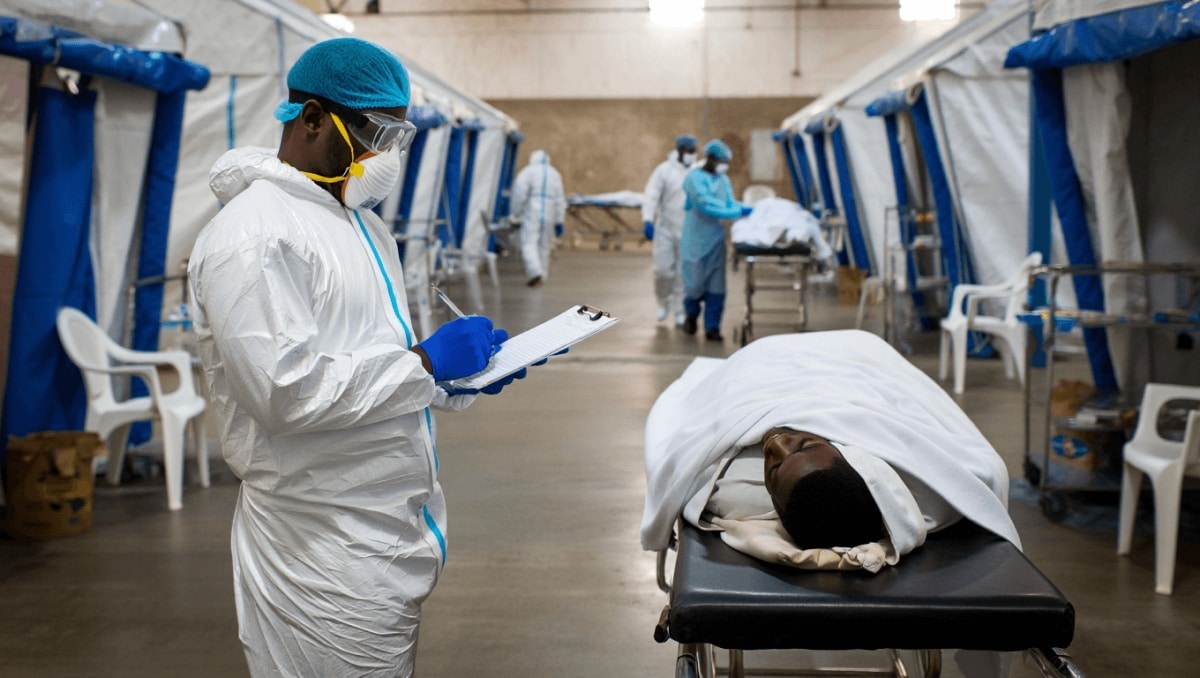
Health authorities say a recent Ebola outbreak has been linked to more than 130 deaths, raising alarm among regional officials and international partners. U.S. authorities have signaled a stepped-up role — saying they are “leaning into” support — as public health teams scramble to contain the virus and protect nearby communities.
Rapid escalation, limited details
The situation has evolved quickly: local health ministries and international responders report a growing death toll and clusters of illness in the affected area. Confirmation of the exact number of infections remains ongoing as teams verify laboratory results and trace contacts.
Michael Page dropped from UFC rankings despite victory: what it means for his career
Viral video shows 81-year-old delivery worker struggling with heavy luggage
Officials emphasize that reported fatalities reflect both confirmed and probable cases under investigation rather than a finalized tally. That uncertainty is typical in emerging outbreaks, especially where health systems are already stretched.
What the U.S. response looks like
U.S. public-health and humanitarian agencies have described their posture as more assertive, offering technical assistance, logistical support and coordination with international partners. The specific mix of resources can include rapid diagnostic capacity, cold-chain support for vaccines and training for local clinicians and contact tracers.
Describing the U.S. role as “leaning into” the response signals a willingness to escalate involvement if the outbreak worsens, but officials stress that on-the-ground action will be shaped by needs identified by local authorities.
- Deaths linked: More than 130 fatalities reported so far, according to health authorities.
- U.S. posture: Officials say the United States is increasing support, with technical and logistical assistance planned.
- Verification ongoing: Case counts and lab confirmations are still being updated.
- Vaccines and treatments: Access depends on supply chains, cold storage and rapid delivery to high-risk areas.
Why this matters now
Ebola remains a high-priority threat because of its high fatality rate and potential for rapid spread in communities with limited healthcare access. Early intervention — including case finding, isolation, safe patient care and vaccination of contacts — is key to preventing wider transmission.
For neighboring countries and international travelers, the immediate risk is usually concentrated near the outbreak zone, but porous borders and informal movement can complicate containment. Timely surveillance and cross-border coordination can reduce that risk.
On-the-ground challenges
Response teams face several predictable obstacles. Laboratories can be overwhelmed when many samples arrive at once. Reaching remote or densely populated areas requires reliable transport and secure cold chains for vaccines. Community trust is also essential: if residents fear isolation or stigmatization, they may avoid reporting symptoms.
These operational pressures help explain why outside assistance — from multinational agencies, regional centers for disease control and bilateral partners — often plays a critical role in turning outbreaks around.
Short-term implications and next steps
In the coming days, authorities say they will focus on accelerating laboratory confirmation, expanding contact tracing and deploying vaccines to high-risk contacts and frontline workers if available. International partners will continue to assess needs and scale support accordingly.
Public-health officials advise vigilance rather than panic: standard prevention measures, prompt medical evaluation for symptoms such as fever and bleeding, and cooperation with local health teams remain the most effective tools.
Key takeaways:
- The outbreak has been tied to over 130 deaths; case counts are still being confirmed.
- The U.S. has publicly indicated increased engagement, supplying technical and logistical aid as requested.
- Containment depends on rapid diagnosis, vaccination of contacts, and community cooperation.
- Cross-border coordination and sustained funding will be crucial to prevent wider spread.
As the response progresses, health authorities will provide updated figures and guidance. The evolving picture underscores the importance of swift, well-coordinated action to protect vulnerable communities and limit international impact.