Show summary Hide summary
As food prices stay high and households try to stretch groceries, many rely on quick rules to decide what’s safe to eat. An epidemiologist says several common shortcuts—like trusting the “sniff test” or assuming reheating fixes everything—are misleading and can put people at risk.
Why this matters now
With more consumers trying to reduce waste and save money, guessing whether food is safe has become common practice. That makes clear, practical guidance important: some household checks are harmless, while others can mask real danger because bacterial growth and toxins are often invisible.
Kankakee woman faces aggravated battery charge after liquor store brawl
Arch Manning scrambling to secure role at Texas as deadline looms
What the smell test misses
People often smell leftovers to decide if they should toss them. But many illness-causing bacteria don’t produce a noticeable odor, and the absence of a bad smell is not a reliable safety signal. Relying on your nose can let contaminated food stay on the plate.

Conversely, a sour smell can indicate spoilage, but not all spoilage organisms are harmful; nevertheless, when in doubt, discard food you suspect has gone bad. The conservative approach is safer than guessing.
Mold: not all cases are equal
Mold on food requires different responses depending on the item. Hard cheeses and firm fruits can sometimes be salvaged by cutting away at least an inch around and below the visible mold, because mold cannot easily penetrate dense surfaces.

Soft foods—such as yogurts, deli meats, cooked rice, and bread—are porous and allow mold to spread unseen. Those should be thrown out once mold appears. Packaged goods with mold, even if only on the surface, should be discarded; spores can contaminate the entire product.
Why reheating is not a universal fix
Heating food can kill many bacteria, but it does not neutralize all threats. Some bacteria produce heat-stable toxins that survive cooking temperatures. If food has been handled or stored improperly, reheating may eliminate live microbes but not the toxins they created.
This is particularly relevant for improperly cooled cooked rice, starchy dishes, and foods left too long at room temperature—these can harbor organisms that produce resilient toxins.
Dates on packaging: what they really mean
Labels like “sell-by,” “best-by,” and “use-by” cause confusion. They are often about quality rather than safety: a best-by date indicates when producers believe the product will be at peak flavor. A use-by date on perishable items is more meaningful for safety, but even then storage conditions matter.
Rather than purely trusting dates, check how the item was stored and use common-sense rules for perishables: refrigeration at safe temperatures and prompt cooling after cooking.
Practical rules to follow at home
- Two-hour rule: Perishable food left at room temperature for more than two hours should be discarded; in hot environments (above 90°F/32°C), that window shrinks to one hour.
- Leftover timeline: Store cooked meals in the refrigerator within two hours and aim to consume within 3–4 days.
- Mold management: Discard soft or porous foods with mold; cut away mold on firm items with a wide margin.
- Check packaging: Do not use canned or vacuum-packed foods if the container is bulging, leaking, or badly damaged.
- Don’t rely on smell alone: When in doubt—especially for vulnerable people like young children, older adults, pregnant people, and those with weakened immune systems—throw it out.
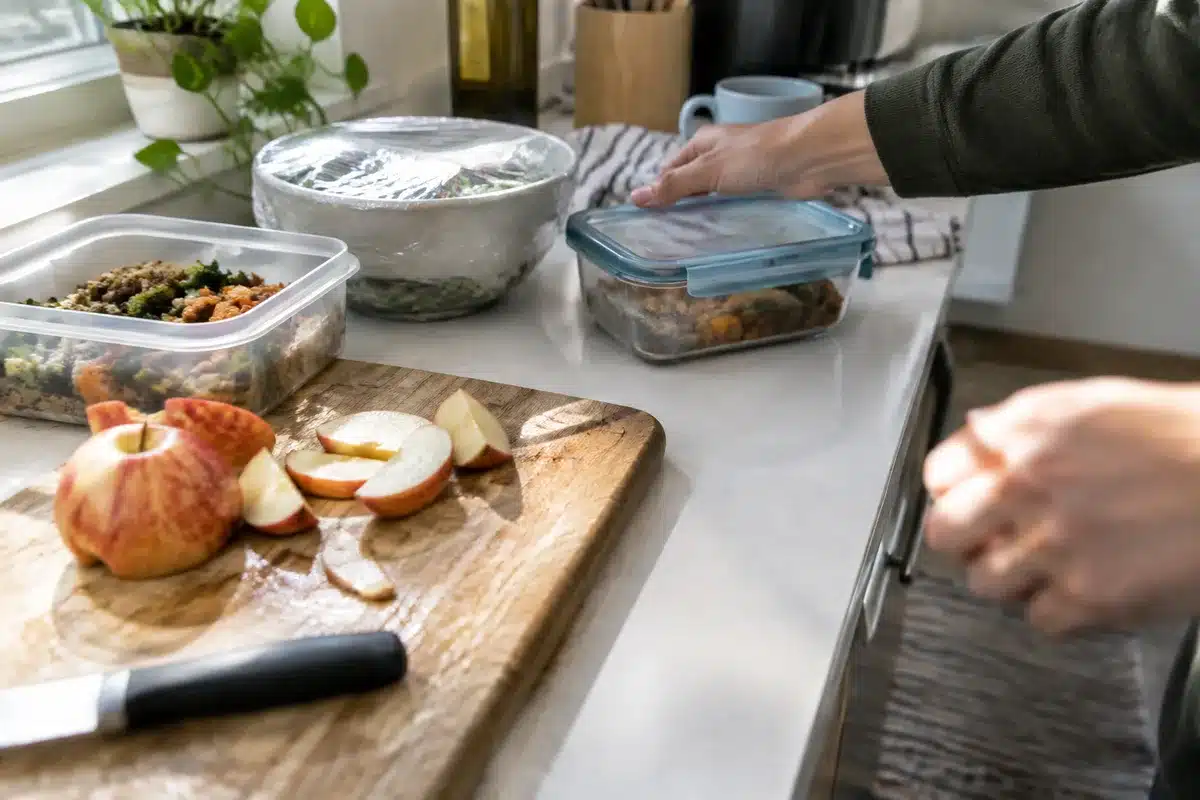
Following these steps reduces the chance of foodborne illness without encouraging wasteful behavior. Small habits—cooling food quickly, storing at the correct temperature, and using airtight containers—make a practical difference.
Special cases to watch
Home-canned or preserved goods, improperly stored ready-to-eat meals, and foods left in warm cars or at outdoor gatherings pose higher risk. Spoilage can be subtle: discoloration, sliminess, off textures, or an unusually tacky surface are signs to stop eating.
Also pay attention to recipes and ingredients that require careful handling—eggs, seafood, and ground meats are more susceptible to rapid bacterial growth and deserve extra caution.
Practical takeaway
The most useful approach combines simple, evidence-based rules with a conservative attitude. Don’t assume absence of smell equals safety; don’t trust reheating to erase all dangers; and treat moldy or damaged items as potentially hazardous. These habits protect health and still allow households to manage food thoughtfully.
Key terms: sniff test, mold, expiration date