Show summary Hide summary
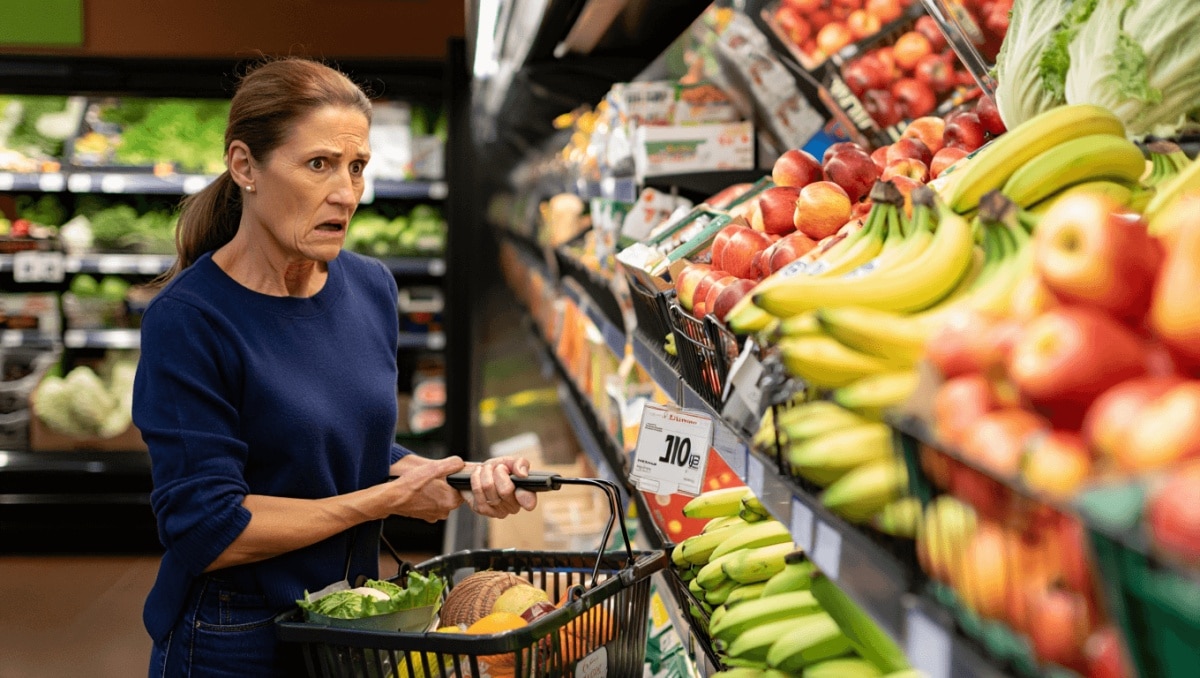
Grocery bills have quietly become a major squeeze on American households, reshaping what families eat and where they shop. With food for home consumption roughly a third more expensive than in early 2019, many consumers are hunting discounts, changing menus and rethinking long-held shopping habits.
Apral Jack begins each grocery run by checking an app for store deals, then builds her shopping list around weekly sales. If prices at her nearest Stop & Shop feel inflated, she crosses items off or drives to a cheaper chain. “I’ll only buy steak when it’s on sale,” she said outside a Lexington, Massachusetts, store.
That kind of calculation is becoming commonplace. A combination of pandemic-era supply disruptions, extreme weather, higher transportation and labor costs, tariffs and global conflicts has pushed food prices sharply higher. The U.S. Bureau of Labor Statistics reports that the cost of groceries to eat at home has risen about 33% since early 2019, while some staples have climbed even more.
Trump hints at imminent Strait of Hormuz agreement: shipping may resume this week
July sports highlights: 10 must-see moments that defined the month
Why shoppers are changing plans, not just products
Households are responding in uneven but predictable ways. Many now use digital coupons, comparison apps and multiple retailers to stretch their weekly food budgets. Others swap brands or reduce purchases of meat and other pricier items. For some families, community resources such as food banks have become an essential part of the safety net.
Economists say the shift is driven by more than headline wage and price measures. Although average weekly earnings for full-time workers have risen modestly faster than grocery prices since 2019, rising rents, utilities and other bills leave many families feeling squeezed, according to Jared Bernstein of the Stanford Institute for Economic Policy Research. “People notice grocery prices the way they notice gas — it’s basic and immediate,” he said.
How steep the increases are — and where they vary
Some items have seen especially large jumps. Ground beef, for example, cost an average $6.82 per pound in June — roughly 79% higher than at the start of 2019 — reflecting a smaller national herd, drought‑related feed shortages, and higher fuel and feed costs.
| Measure | Change since early 2019 | Source |
|---|---|---|
| Food at home (urban average) | +33% | U.S. Bureau of Labor Statistics |
| Ground beef (price per lb) | +79% | U.S. Bureau of Labor Statistics |
| Year‑over‑year food inflation (examples) | St. Louis: +2% • San Francisco: +6% | Consumer Price Index |
Price pressure also differs by region and product, so local shopping strategies vary widely. In San Francisco, for instance, households face higher year‑over‑year increases than in parts of the Midwest.
Four household snapshots
Texas: In Cleveland, near Houston, Ada Torres said meat has moved from regular purchase to occasional treat. A five‑pound package of ground beef can approach $20, so Torres’ family of five eats more chicken and cold cuts and relies on low‑cost canned goods when possible. She worries about the health tradeoffs of processed meats but says economic realities leave little choice.
Greater Boston: Apral Jack has trimmed impulse buys and cut back on wholesale trips. She plans meals around three‑day sales and digital coupons, favoring recipes that stretch discounted chicken and vegetables. Packaged cookies she once enjoyed are off the list because she won’t compromise on taste for cheaper store brands.
San Francisco Bay Area: Barber Jack Chang balances irregular self‑employment income, rising rent for his shop and a growing family household. He leans on generic brands for staples and avoids discretionary treats. “I try to be optimistic,” he said, “but feeding a household of five is a constant calculation.”
Honolulu area: For pastry chef Amanda Tabadero, Hawaii’s reliance on long shipping routes and elevated inter‑island transport costs has made locally grown produce a luxury. She now buys mainland berries and skips some island specialties when prices spike, lamenting that higher costs limit her ability to cook with local ingredients.
Practical coping techniques shoppers use today
- Track weekly circulars and use store apps for targeted digital coupons.
- Shop multiple retailers — combining discount chains with one higher‑priced store for specific items.
- Substitute proteins (more chicken, less beef) and plant‑based staples (beans, lentils).
- Buy larger quantities only when the unit price is clearly lower; avoid bulk for items without reliable consumption plans.
- Rely on community food programs when short‑term gaps appear.
Market researchers say many consumers maintain a fixed weekly food budget and adjust outlets or items to stay within it. If prices stay high or the economic outlook weakens, those adjustments can become permanent changes in shopping patterns.
Politically and economically, the consequences go beyond household menus. Rising grocery costs have become a salient issue for voters this year and could shape local and national debates about inflation, trade policy and support for low‑income families.
For now, the result is a patchwork of strategies: tighter lists, selected indulgences, and more attention to where and how food is bought. Whether those behaviors revert if prices ease — or remain the new normal — will depend on how quickly supply pressures, weather risks and global disruptions relax.