Venezuela told the International Court of Justice this week that a large swath of land now administered by Guyana was improperly taken during a colonial-era settlement, reviving a long-running territorial dispute with fresh legal arguments. The claim targets an area rich in minerals and hydrocarbon potential, raising immediate questions about investor confidence, regional stability, and the future of Guyana’s offshore energy projects.
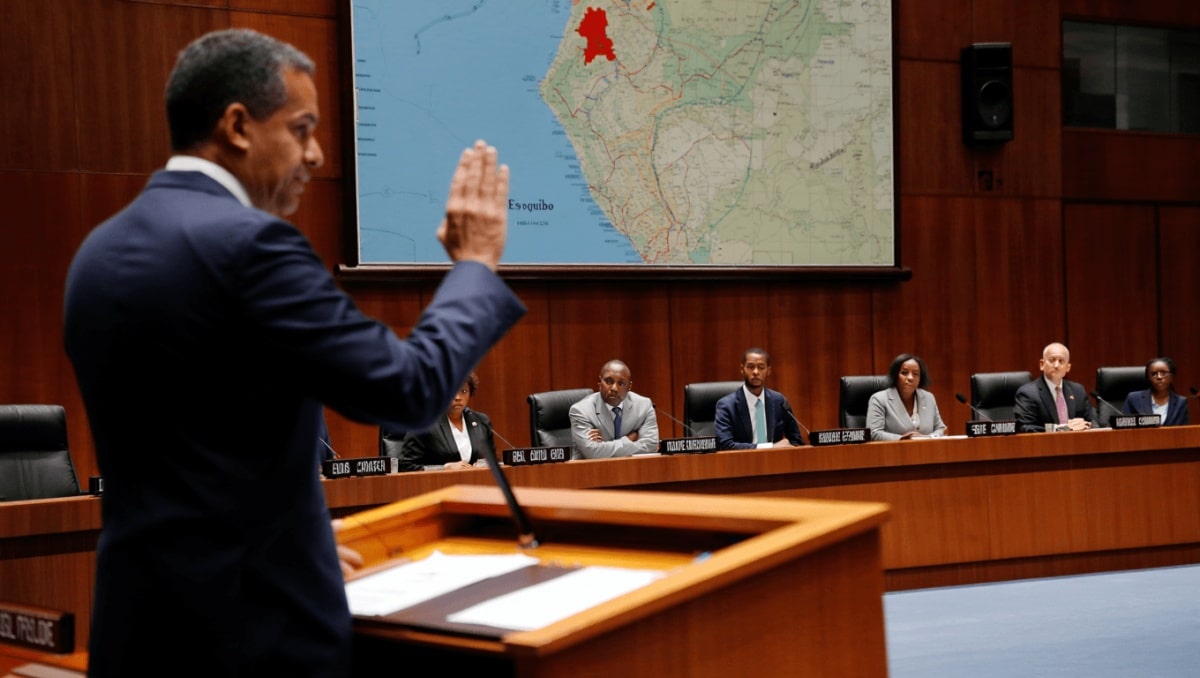
At the ICJ hearing, Caracas argued that the 1899 arbitration decision that awarded the contested territory to what was then British Guiana is invalid because it was procured through deceit. Guyanese officials counter that the century-old ruling is final and binding, and have urged the court to reject Venezuela’s challenge and uphold the existing border.
The contested region, often referred to in public debate as Essequibo, covers roughly two-thirds of Guyana’s land area and includes zones where international companies have discovered significant oil and gas reserves. That economic backdrop has sharpened attention on the legal fight: the outcome could reshape who benefits from future revenues and how investors assess risk in the region.
Michael Page dropped from UFC rankings despite victory: what it means for his career
Viral video shows 81-year-old delivery worker struggling with heavy luggage
Legal experts say the ICJ will first decide whether it has jurisdiction to hear the case — a threshold step that can end proceedings quickly if the court finds it lacks authority. If the court accepts jurisdiction, the dispute would move to a full merits phase where Caracas must substantiate its claim that the arbitration award is void.
Key implications for the near term are practical as much as legal. Ongoing oil projects could face renewed scrutiny, diplomatic ties between Venezuela and Guyana might strain further, and local communities living near the border could experience heightened uncertainty.
- Territorial control: A ruling in Venezuela’s favor could shift administrative authority over large territories and natural resources.
- Energy investments: Offshore developments tied to Guyana’s recent discoveries could be affected by legal or political uncertainty.
- Regional diplomacy: Caribbean and South American states have an interest in stability and may be drawn into mediation or statements of support.
- Legal precedent: The court’s approach to historical arbitration awards could influence other boundary claims worldwide.
Both governments have framed the case as a matter of national sovereignty and legal principle. Venezuela argues historical injustice must be corrected; Guyana stresses the need to uphold settled international agreements and protect the rule of law. For observers, the ICJ’s handling of jurisdictional questions will be the immediate focal point.
What happens next: the court will issue decisions on preliminary objections before any substantive hearing. Those rulings typically come months — sometimes longer — after oral arguments, and either path (dismissal or acceptance) carries its own consequences for diplomacy and markets.
The dispute’s prominence today is driven by more than historical grievance: it intersects with recent resource discoveries and the practical interests of governments and private companies. That mix of law, economics, and geopolitics is why the case is likely to remain a watched international story for the foreseeable future.