Show summary Hide summary
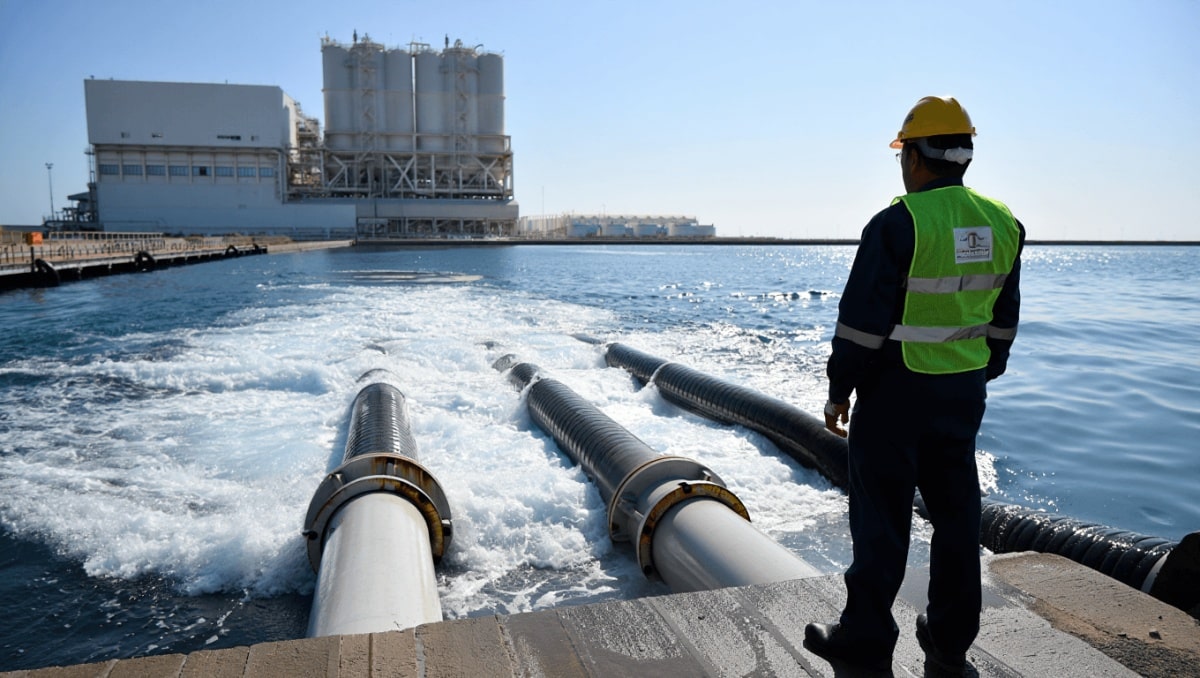
As droughts deepen and rivers run lower, more coastal cities and island nations are turning to seawater and brackish-water desalination to secure drinking supplies. The shift matters because desalination can deliver reliable water fast — but it also raises costs, energy demands and environmental questions that will shape policy and rates for years to come.
How desalination actually produces drinking water
Most modern plants remove salt and impurities using high-pressure membranes in a process called reverse osmosis. Seawater or brackish groundwater is pretreated, forced through fine membranes that block salts and particles, then blended or remineralized to meet drinking standards.
Thermal methods — boiling and condensing water — still exist, especially where cheap heat is available, but membrane systems dominate new capacity because they are smaller, more efficient and easier to scale.
Michael Page dropped from UFC rankings despite victory: what it means for his career
Viral video shows 81-year-old delivery worker struggling with heavy luggage
Why desalination is expanding now
Two forces have accelerated projects worldwide: rising demand from growing coastal populations and recurring droughts that reduce surface and groundwater supplies. Governments and utilities view desalination as a drought-resistant source that can be tapped year-round, independent of rainfall.
Technological advances have lowered energy use and unit costs over the past decade, while modular plant designs let utilities add capacity incrementally. Those shifts make desalination financially and operationally viable for places that previously could not justify it.
What to watch — benefits and trade-offs
Desalination can bolster water security, particularly for arid coastal regions and islands. It provides a predictable supply, supports economic activity, and can reduce dependence on long-distance water transfers.
But the trade-offs are significant:
– Energy: Desalting seawater remains energy-intensive. Unless plants run on renewables or low-carbon power, they increase greenhouse-gas emissions.
– Waste brine: Concentrated salt byproduct, often hotter and denser than seawater, can harm marine ecosystems if not managed carefully.
– Cost: Producing potable water from seawater typically costs more than treating freshwater sources; utilities often pass some of that expense to customers or governments.
– Local impacts: Intake structures, discharge points and construction can affect fisheries, shoreline habitats and coastal communities.
How operators are reducing harm
Projects increasingly pair desalination with solutions that lower footprint: on-site renewables, energy-recovery devices that capture pressure energy, and advanced brine management such as dilution, deep-ocean outfalls, or extracting valuable minerals from concentrate.
Regulators are also tightening rules about intake design and discharge concentrations, and environmental monitoring has become a routine part of larger projects. Nonetheless, long-term ecological effects depend on local currents, marine life and the scale of discharges.
Key facts at a glance:
– What it supplies: Alternative freshwater from seawater or brackish groundwater.
– Main method: Reverse osmosis membranes.
– Typical uses: Municipal drinking water, industrial process water and agricultural irrigation in some regions.
– Main downsides: Energy consumption, carbon footprint and brine disposal challenges.
– Where it’s growing: Middle East, parts of the U.S. (coastal California), Australia, and island states.
Costs, financing and who pays
Desalination projects range from small, locally funded plants to large, multi-hundred-million-dollar facilities financed by governments, utilities or public-private partnerships. Operating costs depend on electricity prices, labor, regulatory compliance and the plant’s energy efficiency.
Households may see higher water bills where desalination contributes a large share of supply; in some jurisdictions governments subsidize plants to limit consumer impact. Equity questions emerge when wealthier coastal users access costly desal water while inland or disadvantaged communities face different shortages.
Future directions
Expect continued innovation: smarter membranes, smaller modular units, more hybrid systems that use solar or wind power, and pilot projects aiming to extract minerals from brine. Policy choices will determine whether desalination scales with lower emissions and acceptable ecological impact.
For cities weighing desalination today, the choice is pragmatic rather than ideological: it buys resilience against drought, but not without fiscal, environmental and planning commitments. Monitoring, transparent permitting and investments in energy efficiency will decide whether desalination becomes a sustainable mainstay or a costly, contested stopgap.