Show summary Hide summary
A minimally invasive procedure that temporarily blocks excess blood vessels around the knee produced sustained pain relief for most people in a recent clinical trial, offering a new conservative option for those hoping to postpone or avoid joint replacement. The results suggest a potentially repeatable treatment that reduces inflammation and improves mobility for at least a year.
The technique, known as genicular artery embolization (GAE), targets abnormal blood vessel growth that develops with knee osteoarthritis. By slowing blood flow to inflamed areas, clinicians aim to calm irritated nerves and lower swelling without operating on the joint itself.
How the procedure works
Joey Weslo: latest updates and what to know today
UFC 334: two championship fights at Madison Square Garden promise a blockbuster night
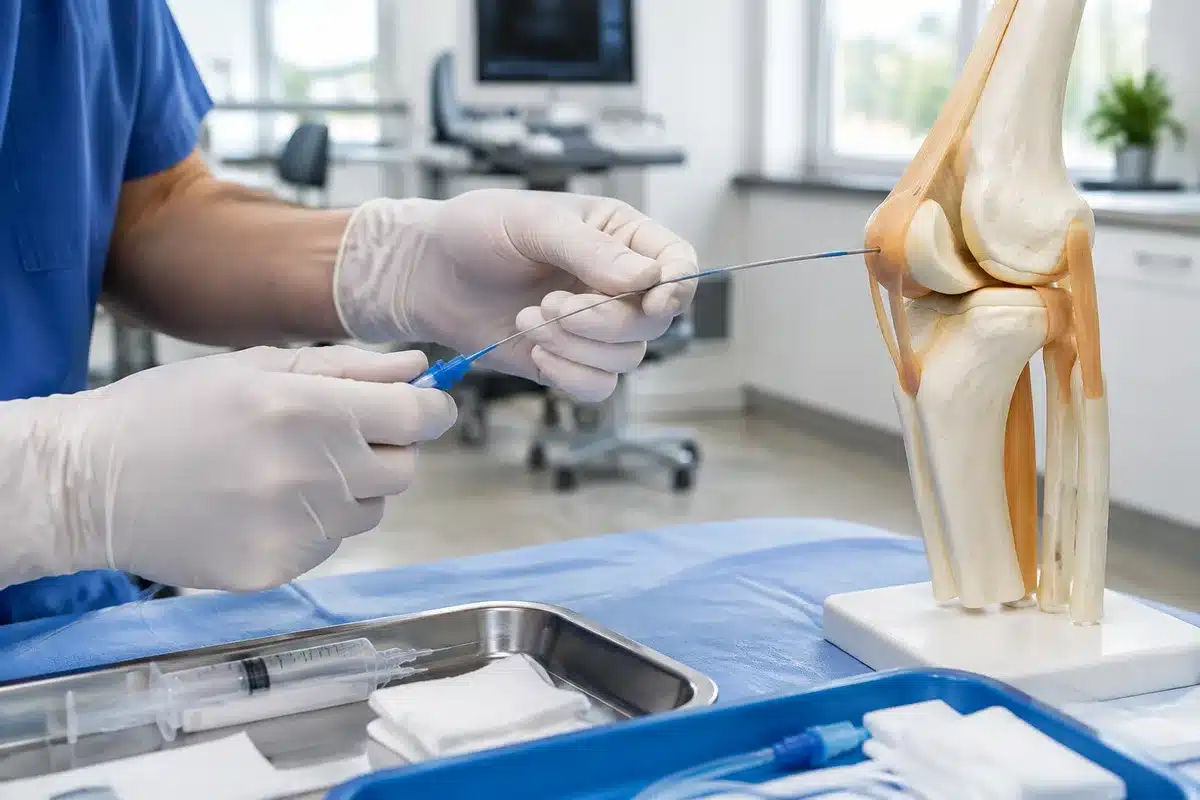
Physicians guide a thin catheter into the small arteries around the knee using live X‑ray. They then inject tiny, **dissolvable gelatin microspheres** into selected vessels to temporarily reduce excess circulation to the diseased tissue.
The particles break down over time, leaving no permanent implants, and the intervention is performed on an outpatient basis under local anesthesia.
Because the change is not structural—GAE does not regenerate cartilage—it is presented as a symptom-directed therapy rather than a cure for joint degeneration.
What the trial found
The multicenter study enrolled 194 patients who underwent 239 embolization procedures. Key outcomes included substantial and sustained reductions in pain and measurable improvements in daily function that persisted through 12 months of follow-up.

- Patient response: About 80% reported meaningful pain relief lasting at least one year.
- Procedures performed: 239 embolizations across 194 participants.
- Safety profile: No severe adverse events were recorded; 6.7% experienced mild, self-limited problems such as transient skin discoloration or minor bruising.
- Functional gains: Participants reported easier walking, stair climbing and bending; overall quality-of-life scores more than doubled on average over 12 months.
Researchers from Charité‑Universitätsmedizin Berlin, including deputy head of Interventional Radiology Florian Nima Fleckenstein, described GAE with rapidly resorbable gelatin spheres as a safe, minimally invasive option that can close a treatment gap for people with symptomatic knee osteoarthritis who are not ready for major surgery.
Limitations and open questions
Despite the encouraging results, investigators stress the study has important constraints. There was no randomized control or sham procedure, which makes it difficult to separate the physical effects of vessel occlusion from placebo-related improvements.
Follow-up extended only to one year. Longer observation is needed to learn how durable the benefit is and when, or if, repeat treatments will be necessary.
And while GAE can reduce symptoms, it does not repair structural damage to cartilage or bone—so it may serve best as a bridge therapy for patients seeking to preserve function and delay joint replacement.
Why this matters now
Osteoarthritis affects millions worldwide, and a growing number of patients seek alternatives to long-term medications, repeated steroid injections or immediate knee replacement. A minimally invasive, outpatient procedure with a low complication rate could change how clinicians manage moderate to severe knee pain, especially for people aiming to remain active without major surgery.
Ongoing larger, randomized trials are under way to confirm these early findings and define which patients benefit most.
Quick facts
- Study size: 194 patients, 239 procedures.
- Reported durable pain relief: ~80% at 12 months.
- Major complications: none observed in the trial cohort.
- Common minor side effects: ~6.7% (transient skin changes, mild bruising).
- Primary limitation: no control group and limited follow-up.
For people weighing treatment options, GAE may offer a meaningful interval of symptom control with low short-term risk—but patients should discuss individual suitability, expected benefits and the current limits of evidence with their clinicians while larger comparative studies continue.