
Show summary Hide summary
Christina Applegate’s recent disclosure that her long‑standing diagnosis of multiple sclerosis has been overturned has reopened debate over how often MS is mistaken for other disorders—and what that means for people on years of treatment. The development matters now because improved imaging and specialist review can change both therapy and life plans for patients who are still searching for answers.
How the re-evaluation unfolded
Applegate, 54, told listeners on her Oct. 20 podcast that she was originally diagnosed with MS in 2021 after months of severe symptoms and extensive testing, including brain and spinal MRIs and a lumbar puncture. Clinicians had reported numerous white‑matter lesions on her scans and she began disease‑modifying infusions.
Joey Weslo: latest updates and what to know today
UFC 334: two championship fights at Madison Square Garden promise a blockbuster night

Her care team later paused those infusions to monitor immune cell counts. When her B‑cell levels remained unchanged, physicians ordered repeat imaging and a fresh review of the findings. That second look led the neurologist to conclude the brain changes were not consistent with MS, and Applegate was informed the diagnosis was being rescinded.
The reversal does not mean her symptoms vanished. She continues to experience neurological problems and is now searching for an explanation other than MS.
Why MS is difficult to pin down
Neurologists say the root of the problem is diagnostic complexity: there is no single laboratory or imaging test that definitively proves or rules out multiple sclerosis. Instead, clinicians assemble a pattern from clinical history, exam findings and radiology that can sometimes be subjective.
Dr. Marwa Kaisey, an associate professor of neurology at Cedars‑Sinai who has studied referral populations, has found that a notable share of patients arriving at specialized MS clinics with an existing diagnosis do not meet current criteria on closer review. In a combined UCLA and Cedars‑Sinai series, nearly one in five people referred with MS were reclassified after specialist evaluation.
That matters because many of those patients had been on long‑term MS therapy.
What modern imaging adds
Advances in MRI interpretation are helping clinicians separate MS‑related lesions from other white‑matter changes. One example is the central vein sign, an imaging marker that identifies tiny veins running through the center of a lesion—an appearance more typical of MS.
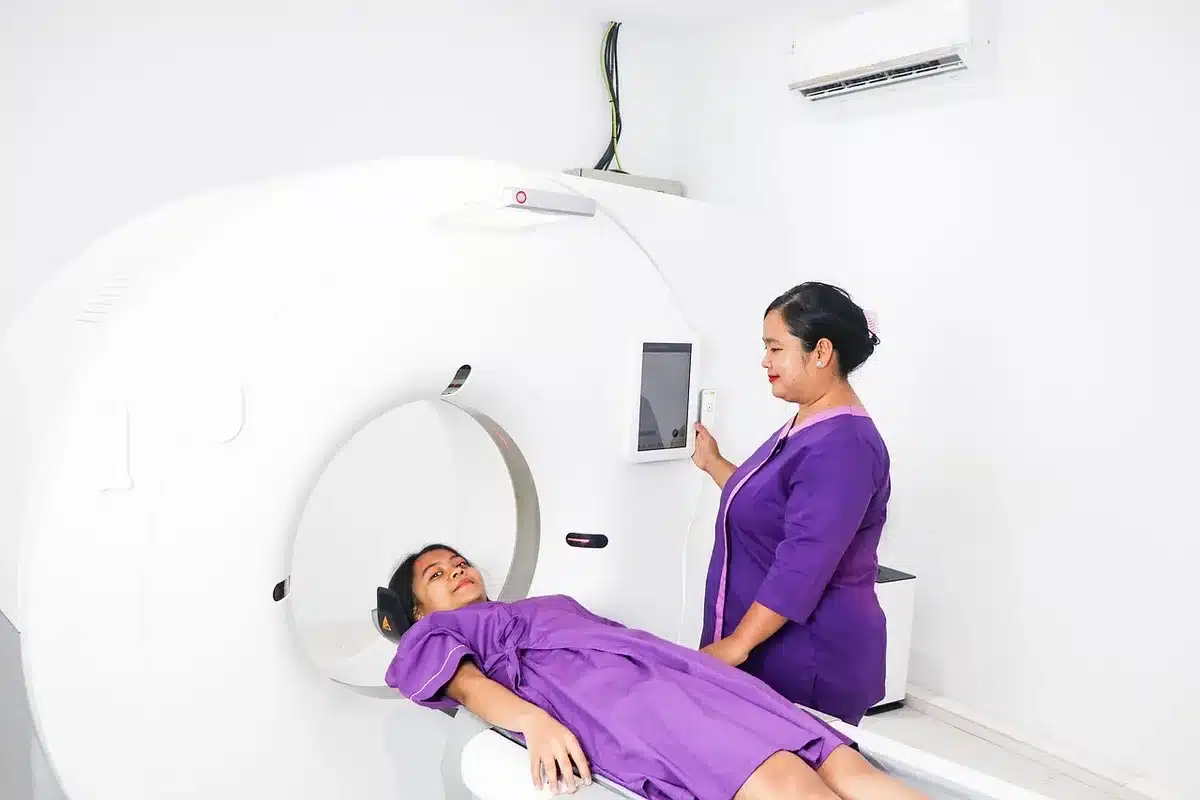
“Newer scanning protocols and focused reading can substantially improve specificity,” said Dr. Richard Ransohoff, a neurologist in Boston involved with the American Brain Foundation. He notes that in recent years radiologists and neurologists have become better at distinguishing inflammatory demyelination from vascular, migraine‑related or age‑related white‑matter changes.
Common conditions that can masquerade as MS
Symptoms such as numbness, fatigue and cognitive fog are common to many disorders. When brain scans show white spots, several alternative diagnoses should be considered.
- Migraine — Can produce small white‑matter changes on MRI that may be mistaken for MS lesions, typically differing in size and location.
- Autoimmune diseases (for example, lupus) — May cause neurologic symptoms and imaging abnormalities that overlap with MS.
- Neuromyelitis optica spectrum disorder (NMOSD) and MOG antibody disease — Distinct inflammatory disorders of the central nervous system that require different treatments than MS.
- Certain strokes, especially in younger adults — Vascular events can mimic the abrupt, focal symptoms seen in MS relapses.
- Small vessel ischemic disease and age‑related white‑matter change — Often related to vascular risk factors rather than demyelination.
When a diagnosis changes, what comes next
For some patients, revising an MS diagnosis leads to a clear alternative and targeted therapy. In other cases—like Applegate’s so far—there is relief that MS has been ruled out but frustration at continuing symptoms and uncertainty about the cause.
Clinicians emphasize the emotional and practical consequences of a changing diagnosis. Patients may have built a life and support network around an MS label; losing that explanation can be disorienting and distressing.
Practical steps for patients
If you or a loved one has been diagnosed with MS, specialists recommend several measures to reduce the chance of misclassification and to ensure appropriate care:
- Get a second opinion at a dedicated MS center or from a neurologist experienced in demyelinating diseases.
- Request a review of prior MRI scans with attention to advanced markers such as the central vein sign.
- Ask whether blood tests for alternative autoimmune disorders or specific antibodies (e.g., AQP4, MOG) are indicated.
- If treatment is ineffective or causes troubling side effects, discuss reassessment rather than assuming failure of therapy.
- Keep detailed records of symptom onset, evolution and any responses to treatment—these timelines can be crucial for diagnosis.
Outlook
MS care has changed dramatically over recent decades, with many more therapeutic options and improved outcomes for people with confirmed disease. At the same time, diagnostic tools are getting better at separating true MS from look‑alikes. That progress should prompt clinicians to reassess uncertain cases and patients to seek expert input when the clinical picture does not fit.
For those whose diagnosis is reversed, the path ahead may involve new testing, symptom management and, importantly, time to reconfigure medical and personal plans once grounded in a different diagnosis.