
Show summary Hide summary
Millions of people spend long stretches of the workday seated, and that steady inactivity shows up quickly as tightness, sore joints and slumped posture. A few short, office-friendly moves can reset the spine, wake the core and ease tension in the hips—practical changes that can reduce discomfort and improve comfort at the desk within minutes.
Yoga instructor Baldwin outlines five compact stretches that can be done from a chair or with a quick stand-up break. She urges workers to use personal judgment about what’s appropriate in their workspace and to stop any movement that causes pain.
US consumer confidence slips: weakening outlook as pump prices remain above $4
NBA teams poised for breakout in 2026-27: six surprise contenders to watch
1) Elbow squeeze to restore alignment
Sit upright with your elbows lifted so they line up roughly with your shoulders. Draw the belly in to stabilize the trunk, then pull the shoulder blades toward each other while tucking the chin slightly, as if the back of the head were reaching upward.
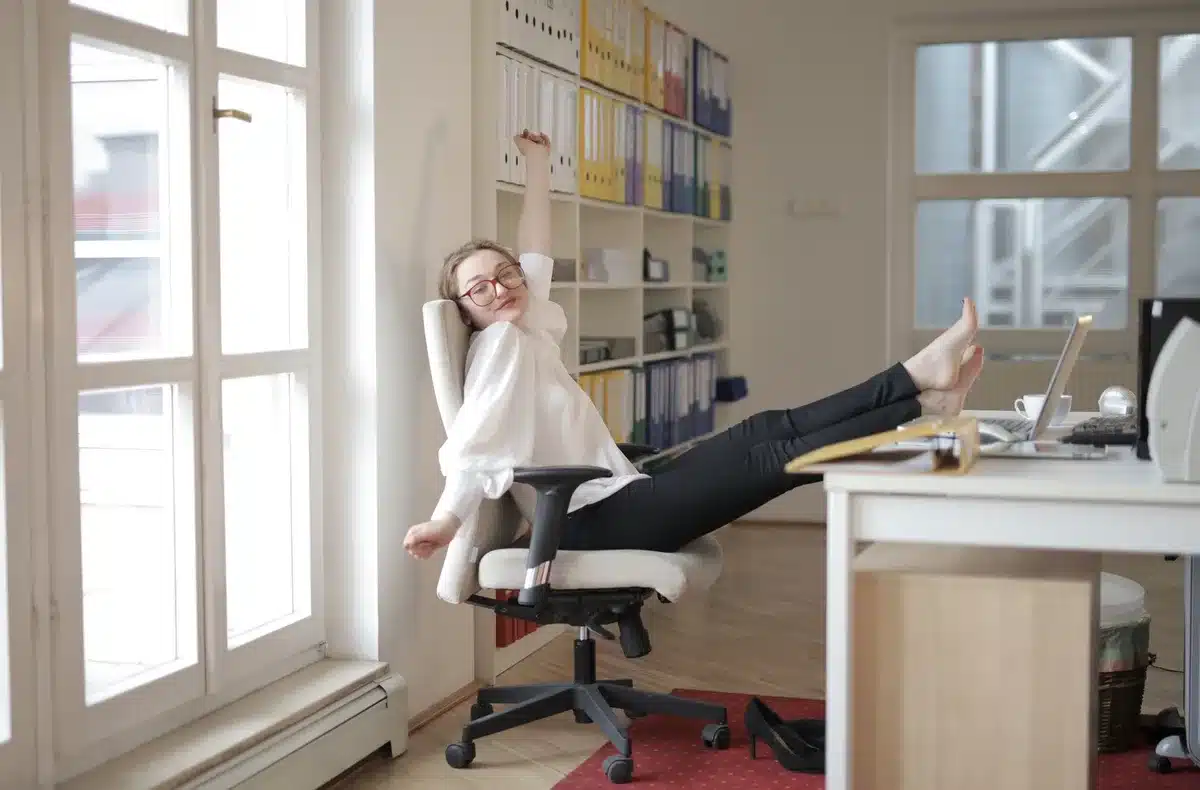
Keeping that posture, move both elbows forward until they meet, then open them back out and squeeze again. Aim for about ten repetitions and repeat a few times through the day—Baldwin notes short, frequent bursts feel better than doing nothing until late in the afternoon.
2) Shoulder squeeze for the upper back
From an upright seated position, lower your arms so the palms face down and actively contract the muscles between the shoulder blades. Cross the arms in front of your chest so the elbows meet, letting the head round forward slightly, then open the arms and draw the blades together.
Repeat this sequence several times. The pattern of rounding forward and then opening helps remind you to keep the shoulders back and the neck aligned while you work.
3) Gentle spinal mobility
Interlace your fingers behind your head and bring the elbows inward. Slowly nod the chin toward the chest, feeling a soft traction along the back of the neck; then lift the chest and tilt the head back slightly to arch the upper spine.
Coordinate each movement with steady breathing—inhale as you open, exhale as you hinge forward—to relieve built-up tension. Baldwin suggests this can be a useful reset when stress rises during the day.
4) Seated core activation
While seated, sit tall and draw the navel toward the spine to find the deep abdominal contraction. Notice how your sit bones press into the chair. Rock gently forwards and backwards while maintaining that inward pull, engaging the lower core.

Although subtle, this practice reinforces posture and recruits the same muscles used for stability and everyday lifting. Baldwin describes it as a discreet but effective abdominal exercise you can do without leaving your desk.
5) Hip-flexor and calf lunge (stand if you can)
If you are able to stand briefly, step one foot forward into a shallow lunge, bending the front knee while keeping the torso upright. Press the back heel down to lengthen the calf and open the front of the hip.
Keep the same upright posture you practice while seated, then switch sides. Regular standing lunges help counteract the shortened hip flexors that develop from prolonged sitting.
- Elbow squeeze: 10 reps per set, repeat 2–3 times daily — targets spinal alignment.
- Shoulder squeeze: 8–12 reps, use throughout the workday — improves upper-back mobility.
- Spinal mobility: 6–10 slow repetitions with breath — reduces neck and thoracic tension.
- Seated core activation: 30–60 seconds per round, several times daily — enhances core engagement and posture.
- Standing lunge: 20–30 seconds per side when possible — stretches hip flexors and calves.
These exercises are low-risk but not one-size-fits-all. If you have a history of back, shoulder or hip injuries, consult a clinician before trying new movements. For most office workers, short, frequent practice is more effective than a single long session—simple resets every hour can prevent stiffness and help maintain focus.
As hybrid and remote schedules keep many people seated for longer stretches, integrating small mobility breaks into the day offers a practical way to reduce discomfort without disrupting work. Baldwin’s approach emphasizes consistency and breath: regular micro-breaks, mindful posture and a few quick stretches can make the workday feel noticeably easier.