Show summary Hide summary
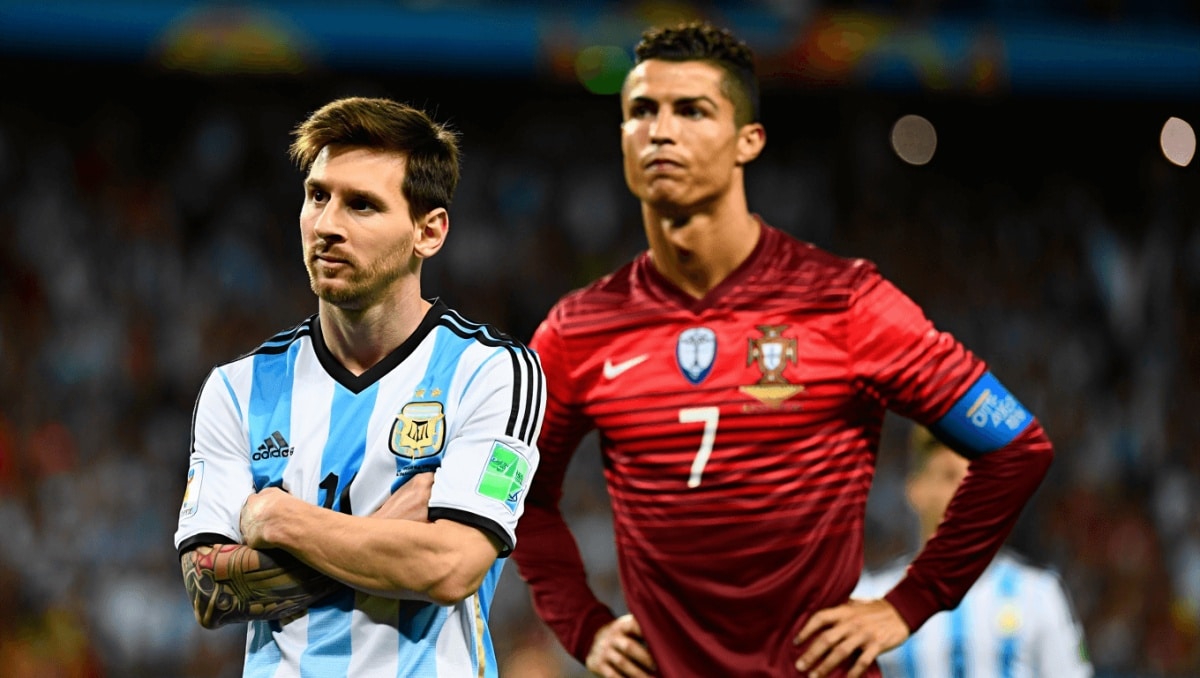
Two disputed VAR interventions at the 2026 World Cup have become a flashpoint for how fans now view Lionel Messi compared with Cristiano Ronaldo — and the reactions say as much about public sentiment as they do about refereeing. These replay moments have sharpened perceptions of both players and raised fresh questions about how technology interacts with long-standing fan bias.
In Phoenix, Folarin Balogun was sent off after a pitchside review showed studs making contact with Tarik Muharemovic, prompting a dismissal for serious foul play. The decision, made after referee Raphael Claus examined the monitor, immediately sparked comparisons to a similar challenge by Lionel Messi earlier in the tournament — a moment many supporters argued received gentler treatment.
Less than a day later, slow-motion replay and automated offside detection put Mario Pašalić fractionally ahead of play in the buildup to Croatia’s late equalizer against Portugal. The image left little doubt for many viewers, yet commentary and social feeds overwhelmingly framed the sequence in terms of narrative allegiance: the Croats as underdogs, Portugal — and by extension Cristiano Ronaldo — as the establishment figure.
Michael Page dropped from UFC rankings despite victory: what it means for his career
Viral video shows 81-year-old delivery worker struggling with heavy luggage
Those two episodes point to a larger tension. Video-assisted officiating was introduced to remove human error, but when technology is applied unevenly — or is perceived to be — it can intensify preexisting loyalties and grievances. High-profile calls become shorthand for who is favored, not only who is right.
What the calls reveal about fan sentiment
Public reaction has tilted conspicuously toward Argentina and its talisman. Several factors help explain why:
- Legacy and timing: Messi arrived at this World Cup already carrying the weight of a 2022 title, which colors interpretations of borderline incidents in his favor.
- Playing role and visibility: Ronaldo, at 41, is operating in a constrained striker role; his on-field touches in some matches have been limited, reducing moments that might sway neutral observers.
- Emotional framing: Messi’s quiet demeanor makes him harder to dislike for many fans, while Ronaldo’s history of polarizing moments invites stronger reactions.
None of this changes the objective facts on the pitch: Ronaldo converted a penalty and had a finely judged chance ruled out for a marginal offside, while Portugal ultimately conceded a stoppage-time header by Gonçalo Ramos after the manager chased a winner. But the aftermath shows how interpretation often depends less on the incident itself and more on whose side you’re on.
VAR and automated offside systems were supposed to reduce controversy; instead, they have shifted disputes from “who was right” to “who the system benefits.” That shift has consequences beyond a single match. Confidence in officiating, the reputations of players and even broadcasters’ narratives are all influenced by how these rulings are told and retold on social media.
Immediate implications
The remaining weeks of the tournament still hold sporting surprises — Portugal can still advance, Argentina could be eliminated earlier than expected, and upsets remain possible. But the cultural contest over who is the game’s defining figure feels settled for many fans.
- For referees and organizers: Perceived inconsistency undercuts the authority of replay systems and raises pressure to standardize protocols.
- For players’ legacies: High-visibility VAR moments now factor into public memory as much as trophies and goals.
- For neutral observers: Matches become narrative battlegrounds where small incidents are amplified to fit larger stories.
Ultimately, these episodes are less about a single red card or a split-second offside call and more about how modern football’s technology and storytelling interact. Fans have picked sides; technology will keep adjusting the scoreboard, but it may not shift the allegiances that decide how those scores are remembered.