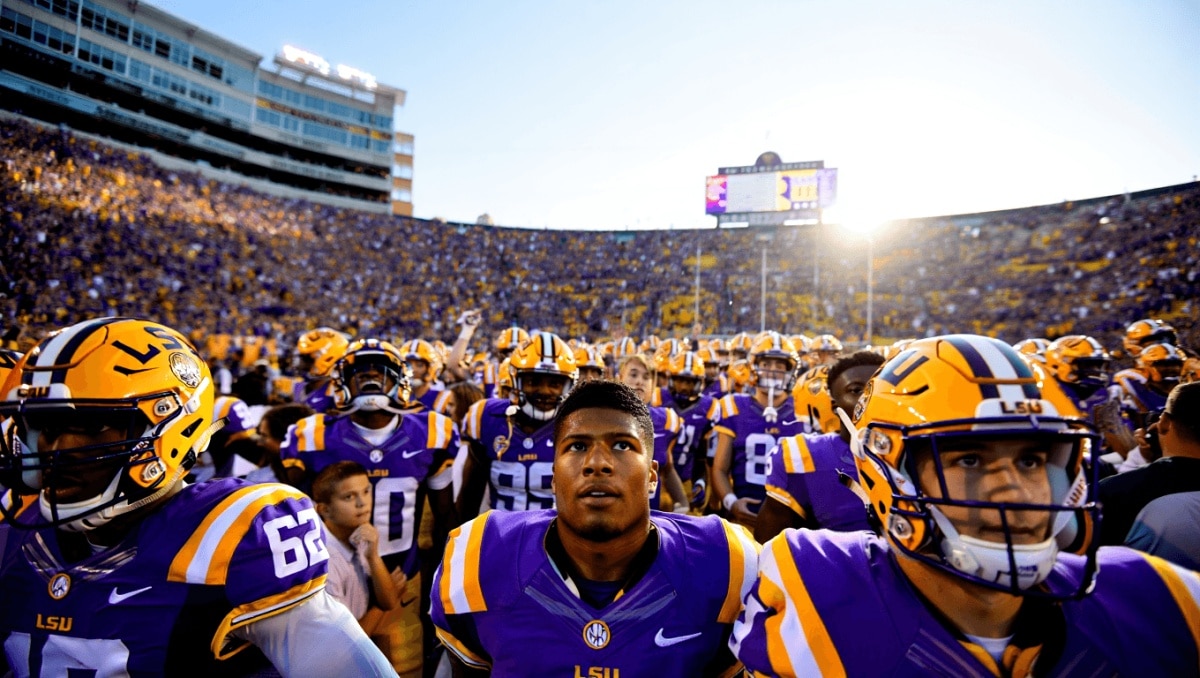
LSU enters the 2026 season as the program most widely tipped to surge upward, reshaping expectations in the SEC and nationally. A headline coaching hire, heavy spending on roster upgrades and a flurry of portal movement have combined to create realistic talk of a College Football Playoff return this fall.
The change at the top is unmistakable: LSU replaced its previous staff and negotiated a long-term deal to bring Lane Kiffin in from Ole Miss, a move that included a reported seven-year, $91 million contract. That decision was followed by the country’s top-ranked recruiting class and the leading transfer class, per 247Sports, signaling an instant roster upgrade.
- Coaching: A high-profile, proven offensive coach takes over a program that expects immediate returns.
- Recruiting and transfers: No. 1 classes on both fronts offer depth across positions that had been inconsistent since 2019.
- Quarterback upgrade: The addition of Arizona State transfer Sam Leavitt brings portal experience and the kind of arm-and-mobility profile that fits an aggressive offense.
- Playoff stakes: A successful season would restore LSU to national-title contention and alter the SEC balance.
Michael Page dropped from UFC rankings despite victory: what it means for his career
Viral video shows 81-year-old delivery worker struggling with heavy luggage
Those elements explain why many prognosticators view LSU as the single biggest riser this year. But several other programs also look poised for marked improvement in 2026.
Auburn
Auburn has rebooted under new head coach Alex Golesh, who arrives after three productive seasons at South Florida. The most tangible carryover from Golesh’s tenure at USF is quarterback Byrum Brown, who followed his coach to Auburn.
Brown brings uncommon experience: over the last three seasons he compiled roughly 7,300 passing yards, added more than 2,000 rushing yards and was responsible for about 84 total touchdowns. That dual-threat production is the kind of catalyst Auburn has lacked and should lift a program that has struggled to reach eight wins since 2019.
UCLA
UCLA’s case for a leap rests on roster continuity and targeted additions. The Bruins return a sizable core on both lines and supplemented weaknesses through the portal and recruiting calendar, creating more balance on offense and depth in the secondary.
On defense, incremental improvements in tackling and pass rush could convert close losses from last season into wins. For fans and bettors alike, the key question will be whether the team can maintain consistency across the back half of the schedule.
Texas
Texas re-enters the conversation as a program that has upgraded its supporting cast and addressed quarterback uncertainty. Whether through developing an internal option or adding a veteran from the portal, Longhorns observers see a clearer path to a top-tier offense than a year ago.
Recruiting momentum in the trenches and a healthier injury picture also matter: if Texas can protect its quarterback and sustain drives, the projection moves from a good team to one that can challenge for the Big 12 crown and a New Year’s Six bowl.
Oregon
Oregon’s ceiling is tied to defensive improvements and playoff-level offensive efficiency. The Ducks have retained most of their skill-position talent and added defensive depth, which could address a recurring shortfall against elite opponents.
Improved special teams play and a cleaner turnover margin would make Oregon a more complete team and a contender in the Pac-12 — small margins that often separate a nine-win season from a 12-win campaign.
What this all means for the 2026 landscape: a single transformative hire or one high-impact transfer can shift power quickly. LSU’s overhaul is the most dramatic example, but Auburn, UCLA, Texas and Oregon each have concrete reasons to expect better outcomes. For fans, media and NFL evaluators, the coming season will reveal whether these moves produce sustained progress or one-year noise.